Guides
Vienna vs Prague vs Budapest: Which Capital, and How to Combine Them
Tony Denesa – Travel Advisor10 min read
The short version
Vienna, Prague and Budapest are the great trio of Central Europe: three former imperial cities, a few hours apart by train, often visited together and endlessly compared. They are less alike than the comparison suggests.
- Choose Vienna for music, art, coffee houses, palaces and a city that works flawlessly. It is the most elegant and the most expensive of the three.
- Choose Prague for the most complete medieval and Baroque old town, Gothic spires, and beer culture. It is the most fairy-tale — and, in the centre, the most crowded.
- Choose Budapest for the grandest river panorama, thermal baths and the liveliest nightlife. It feels the most dramatic and, usually, gives the best value.
- Combine them by rail: Vienna sits in the middle, roughly two and a half hours from Budapest and about four hours from Prague.
We are, of course, a Vienna guide — but the honest answer is that all three are worth it, and the best trip often includes at least two.
Vienna: the polished capital
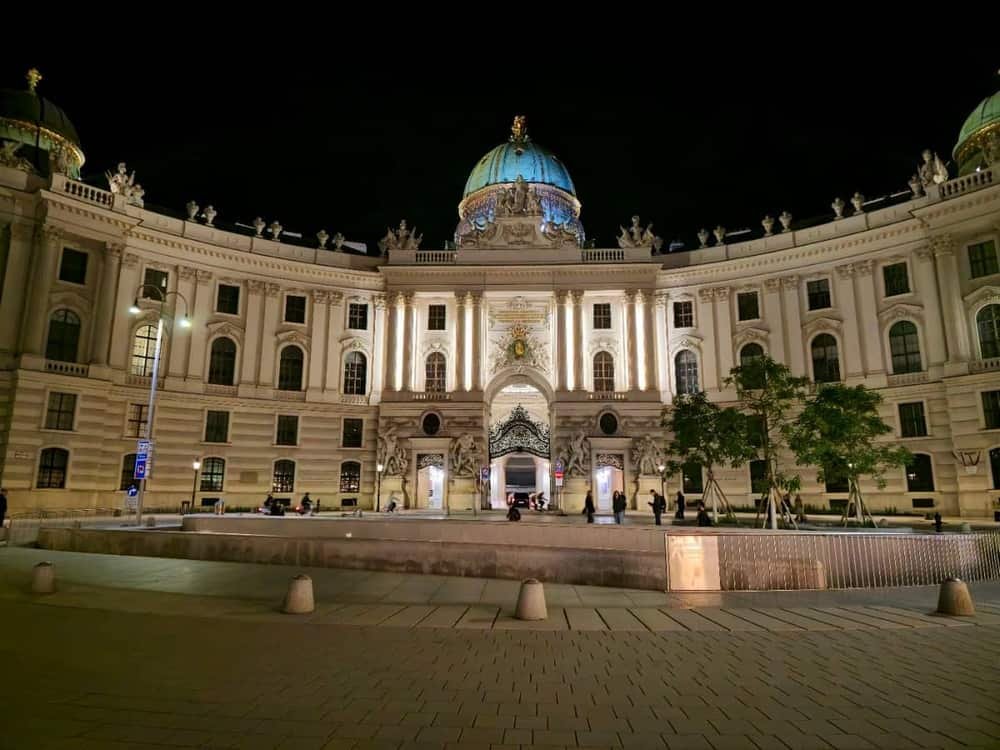
Vienna was the seat of the Habsburgs for more than six centuries, and it still carries itself like an imperial capital: the Hofburg, Schönbrunn, the Ringstrasse boulevards, and museums such as the Kunsthistorisches Museum that hold collections on a par with any in Europe. The story is told in Habsburg Vienna.
Where it wins:
- Music. The State Opera, the Musikverein and the Konzerthaus give Vienna a depth of classical music no other city of this size matches. See our concerts page and music in Vienna.
- Art. Bruegel, Klimt and Schiele, and one of Europe's densest clusters of great museums, in the MuseumsQuartier and around the Ring — see our museums guide.
- Rituals. The coffee houses and the vineyard wine taverns, the Heurigen, are institutions you will not find in the same form elsewhere.
- Ease. Clean, safe, punctual, beautifully run.
Where it loses: it is the most expensive of the three, a little reserved, and less wild at night. Some visitors find it too orderly; others find that exactly its charm. For costs, see is Vienna expensive.
Prague: the storybook city
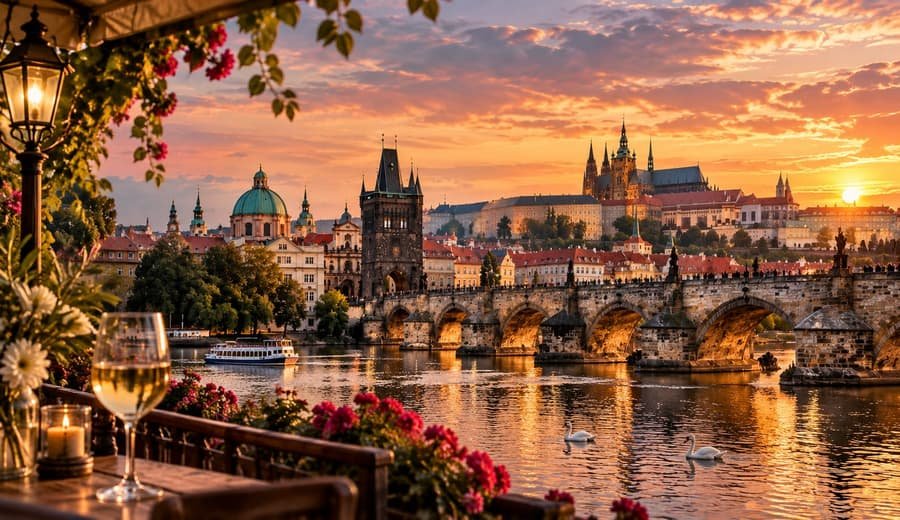
Prague's great advantage is its intact historic core. The Old Town Square, the Charles Bridge with its statues, and the castle district high above the Vltava form one of the most complete medieval and Baroque cityscapes in Europe, and it is extraordinary seen from the river at dusk.
Where it wins: atmosphere on foot, Gothic and Baroque architecture, beer culture, and generally lower prices for food and drink than Vienna.
Where it loses: the historic centre is intensely crowded in high season, parts of it feel given over to tourism, and its museums and music scene, though good, do not reach Vienna's depth. The Czech Republic uses the koruna (Kč), not the euro.
Budapest: the dramatic river city
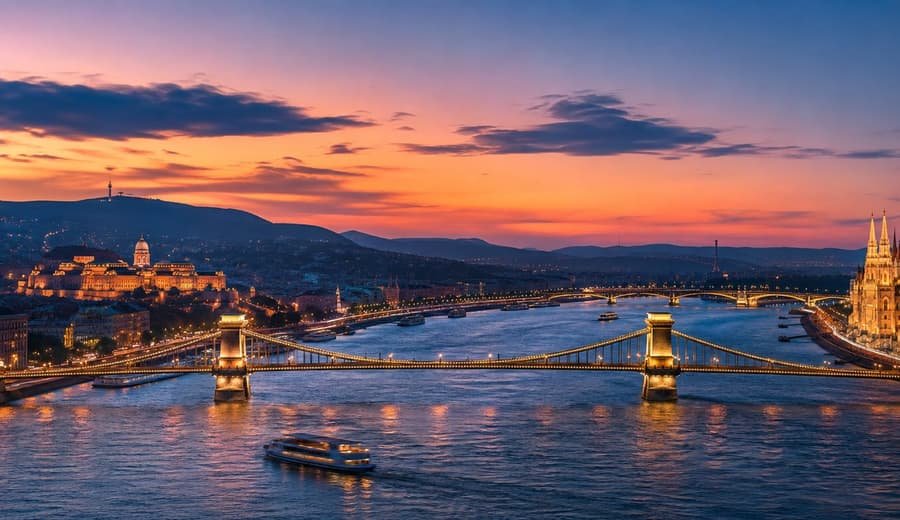
Budapest is two cities facing each other across the Danube: hilly Buda with its castle and Fisherman's Bastion, flat and grand Pest with the Parliament building on the water. At night, when the bridges and the Parliament are lit, it is one of the great urban views of the world.
Where it wins: the river panorama, the thermal baths (a genuinely unique experience), energetic nightlife including the famous ruin bars, and usually the best value of the three.
Where it loses: it is less compact, some neighbourhoods are shabbier, and it lacks the refined polish of Vienna. Hungary uses the forint.
Side by side
- Grandeur: Vienna for palaces and boulevards; Budapest for scale and river views; Prague for the unbroken old town.
- Culture: Vienna leads clearly on classical music and fine art.
- Food and drink: Vienna for coffee houses, pastry and wine; Prague for beer; Budapest for hearty Hungarian cooking and a lively bar scene.
- Nightlife: Budapest first, then Prague, then Vienna.
- Cost: Vienna highest; Prague and Budapest generally lower, though not as cheap as they once were.
- Crowds: Prague's centre feels the most congested in summer; Vienna's are spread across more sights.
- Ease for a first-timer: all three are easy; Vienna is the most effortless.
Which one for which traveller
- First trip to Central Europe, one city only: Vienna if you love culture and comfort; Prague if you want the romance of an old town; Budapest if you want energy and value.
- Couples: all three work. Vienna for concerts and grand hotels — see Vienna for couples — Budapest for the baths and the lit-up river.
- Families: Vienna is the easiest, with the zoo, the Prater and hands-on museums; see Vienna with kids.
- Music lovers: Vienna, without hesitation.
- Night owls and groups of friends: Budapest, then Prague.
- Tight budgets: Budapest, then Prague; in Vienna, plan around the many free things to do.
How to combine them by train
Vienna is the natural hub, and the rail links are direct and comfortable. From Wien Hauptbahnhof, ÖBB Railjet trains reach Budapest-Keleti in roughly 2 hours 20 to 2 hours 40 minutes, every one to two hours, and Prague in about 4 hours, roughly every two hours. These are approximate times — confirm them in the ÖBB timetable before booking. The 2026 timetable added an early Railjet leaving Vienna at 05:10 for Prague and a late one arriving back in Vienna at 23:49 (oebb.at, checked September 2026). Our train stations page explains which Vienna station serves which route.
A note for 2026–2027: the S-Bahn core line between Praterstern and the Hauptbahnhof is closed from 7 September 2026 until the end of October 2027. Long-distance trains from the Hauptbahnhof are not affected, but allow extra time if your hotel relied on that S-Bahn link.
The logical route is linear: Prague → Vienna → Budapest, or the reverse. Travelling directly between Prague and Budapest is a much longer journey than either leg to Vienna, so it makes sense to let Vienna sit in the middle.
Sample itineraries
Seven days — the classic trio
- Days 1–2: Prague. Old Town, Charles Bridge at dawn, the castle district.
- Days 3–5: Vienna. Follow our three days in Vienna route: the Hofburg, Schönbrunn, a great museum, a concert and an evening at a Heuriger.
- Days 6–7: Budapest. The Parliament, Buda Castle, a thermal bath, the river at night.
Ten days — unhurried
- Prague 3 days, Vienna 4 days, Budapest 3 days.
- Use one of the Vienna days for a trip out: the Wachau valley and Melk Abbey (see our Wachau guide) or Bratislava, about an hour away (see our Bratislava day trip). Our five days in Vienna shows how to pace a longer stay.
Two cities, five days
If you only have five days, do two cities, not three: Vienna and Budapest are the easiest pairing, with the shortest train ride.
When to go
All three share a continental climate: warm summers, cold winters, and the best walking weather in May, June and September. Each has a particular season:
- Advent: all three have Christmas markets; Vienna's are the most numerous and varied — see the Christmas markets guide.
- January–February: Vienna's ball season, including the Opera Ball on 4 February 2027 — see our ball season guide.
- Summer: Budapest's baths and river terraces come into their own; Vienna has the Danube Island and open-air cinema.
More month-by-month detail for Vienna in best time to visit Vienna.
Money and practical differences
- Currencies: euro in Vienna; Czech koruna in Prague; Hungarian forint in Budapest. Pay by card in local currency and decline conversion into euros at the terminal.
- Driving: Austria and Hungary both require motorway vignettes. In Austria, a 10-day vignette for a car costs €12.80 in 2026 (asfinag.at, checked September 2026); bought online, the digital version is valid only after 18 days, so buy it at a petrol station for immediate use.
- Coming from Romania: Budapest lies on the way. The direct train from Romania to Wien Westbahnhof runs via Budapest-Kelenföld in the current CFR timetable; details on our from Romania page.
Our verdict
If you can visit only one, let your interests decide, not the rankings. If you can visit two or three, put Vienna in the middle: it is the best-connected, the richest in culture, and the city where you will want an extra day. When you settle on dates, where to stay in Vienna compares the districts honestly.
Where to stay nearby
Live prices and availability on a map centred on this exact spot — hotels, apartments and hostels, so you can judge the walk from here rather than guess from an address.
Bookings made through this map earn us a commission. Your price is unaffected.