
Guides
Vienna Ball Season: How a Visitor Actually Attends a Ball
Tony Denesa – Travel Advisor10 min read
The short version
Every winter, Vienna dances. More than 450 balls take place each year, most of them between New Year and the end of Carnival, in palaces, concert halls and the City Hall (wien.info, checked September 2026). They are not private society events: nearly all sell tickets to anyone, and visitors are welcome. Going to one is among the most memorable things you can do in the city.
- The season opens on 11 November at 11:11 with a public waltz on the Graben — free to watch.
- The peak is January and February. In 2027: the Confectioners' Ball on 14 January, the Vienna Philharmonic Ball on 21 January, the Hunters' Ball on 25 January, the Doctors' Ball on 30 January and the Lawyers' Ball on 6 February.
- The Vienna Opera Ball — the most famous of all — is on Thursday 4 February 2027, with the dress rehearsal on 3 February (wiener-staatsoper.at, checked September 2026).
- You need: a ticket, often a separate table reservation, formal clothes and, ideally, a basic waltz.
What actually happens at a Viennese ball
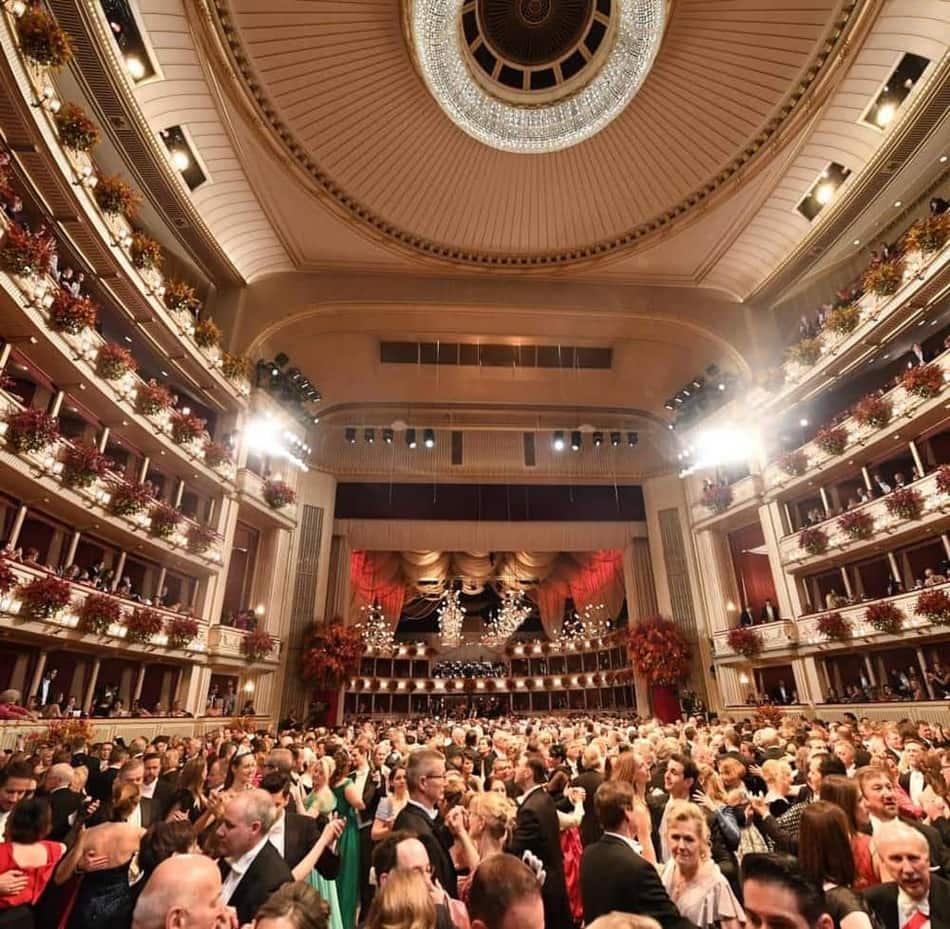
Doors usually open in the evening, and guests spend the first hour exploring: most balls occupy an entire building, with a ballroom orchestra in the main hall, jazz or pop bands in side rooms, a disco late at night, bars, and food counters. Then comes the heart of the evening, the opening ceremony. A committee of young débutantes in white and their partners in tailcoats enters in formation and performs a choreographed polonaise and waltz. At the end, the master of ceremonies calls out "Alles Walzer!" — everyone waltz — and the floor opens to all guests.
Around midnight comes the Quadrille, a group dance called out step by step by a leader, which means that nobody needs to know it in advance and everybody ends up laughing. Many guests stay until the early morning, when a late-night snack — often goulash soup or sausages — restores them for the last dances.
Which ball is right for a visitor?
The Opera Ball. The stalls of the State Opera are covered over to create one enormous dance floor, the boxes are decorated with flowers, and the opening ceremony is broadcast on Austrian television. It is magnificent and a once-in-a-lifetime spectacle — but tickets are expensive, boxes and tables cost far more, and the house is so crowded that dancing is difficult. Go for the experience, not the dancing. Buy only through the State Opera's official channels.
The big Hofburg balls. The Hofburg, the former imperial palace, hosts many of the season's largest balls in its state rooms, with many rooms and several musical styles under one roof. They are the best introduction for most visitors: grand, festive and easier to enjoy than the Opera Ball.
The trade and professional balls. Vienna's professions all have their own balls, and they are often the most fun. The Confectioners' Ball is famous for its desserts — fitting in a city of patissiers like Demel. The Coffeehouse Owners' Ball is listed in the Hofburg on 22 January 2027 — confirm the date on the organiser's site. The Hunters' Ball welcomes traditional Austrian dress rather than evening wear, which makes it more relaxed.
The music balls. The Vienna Philharmonic Ball on 21 January 2027 takes place in the Musikverein, the orchestra's home, with the Philharmonic itself playing at the opening. It is one of the most elegant evenings of the season.
Balls in the City Hall. The neo-Gothic halls of the City Hall host several large, sociable balls with a less formal atmosphere.
Programmes and dates change every season; our events calendar lists what is on.
How tickets work
- Buy from the organiser. Each ball has its own website, which sells tickets directly. For the Opera Ball, use only the State Opera's official site. Be wary of resellers — the same rule as for concerts in our classical concerts guide.
- Entry and seats are usually separate. At most balls, a ticket gets you in but does not guarantee a seat. If you want a table for the night — and after midnight you will — reserve one separately, early.
- Book early for the famous balls. The Opera Ball, the Philharmonic Ball and the big Hofburg balls sell out; smaller balls often have tickets until shortly before.
- Check what is included. Some packages bundle a table, a glass of sparkling wine or a dinner; others include nothing but entry. Drinks and food at the ball cost extra and are priced for the occasion.
We do not quote ticket prices here because they vary enormously between balls and change every season; check each ball's official website for current prices.
What to wear
Viennese balls take their dress codes seriously, and the doorman will too.
- Women: a floor-length evening gown. Short cocktail dresses are generally not accepted at the traditional balls. Débutante white is reserved for the opening committee.
- Men: a tailcoat (Frack) with white bow tie at the most formal balls, including the Opera Ball; a dinner suit (tuxedo) with black bow tie is accepted at many others.
- Traditional dress: at some balls, including the Hunters' Ball, Austrian traditional costume is welcome and even expected.
- Practical: comfortable dancing shoes (you will be on your feet for hours), a small bag, and a coat you do not mind leaving in a busy cloakroom.
If you did not pack formal clothes, Vienna has specialist evening-wear rental shops. The ticket or ball website always states the required dress code — read it before you pack.
Learning to waltz
You do not need to be a good dancer, but a few basics make the night much more fun. Vienna's traditional dance schools, several with more than a century of history, offer short private lessons and crash courses in the Viennese waltz, the slow waltz and the midnight quadrille, which many visitors book for the afternoon before the ball. The Viennese waltz is fast and turns constantly; ten minutes of practice beforehand will save you from surprises on the floor.
For the musical background — Johann Strauss, the waltz kings and the Philharmonic — read music in Vienna, and afterwards visit the gilded Johann Strauss monument in the Stadtpark.
Where to stay for a ball
Stay close enough to walk or take a short taxi ride in evening dress, and book early: hotel prices rise sharply around the Opera Ball. The grand hotels on the Ring — the Hotel Imperial, the Hotel Bristol and the Hotel Sacher, all a few minutes from the Opera — are the traditional choices, and on Opera Ball night their lobbies become part of the show. Keep in mind that Vienna's city tax is 5% of the room price (wien.gv.at, checked September 2026). For more options by budget, see where to stay in Vienna.
Planning a ball trip
- Pick the ball first, then book flights and hotel. Dates are fixed; flexibility is on your side only if you choose among several balls.
- Plan a quiet next day. Balls often end in the early morning. A slow breakfast in a coffee house and an afternoon museum are about right.
- Make a winter week of it. Pair the ball with the State Opera — see our State Opera tickets guide — skating at the Wiener Eistraum on Rathausplatz (22 January – 7 March 2027) and the coffee houses. Our Vienna in winter guide has more ideas.
- Watch the weather. January is the coldest month, with average highs around 3.5 °C; walking between venues in evening shoes on icy pavements is a real hazard. Check our weather page.
- As a couple, a ball is the most romantic evening Vienna offers; see Vienna for couples.
A note on the Life Ball
Older guides still mention the Life Ball, the flamboyant AIDS charity event once held at the City Hall. It ended after 2019 and no longer takes place.
What to skip
"Ball experience" packages sold by street ticket sellers, and anything that promises "guaranteed Opera Ball boxes" outside official channels. The real thing is easy enough to book yourself — and the best-value evening is often not the Opera Ball but a big, cheerful ball in the Hofburg with a table booked, good shoes and nowhere to be the next morning. For the full winter calendar, see best time to visit Vienna.
Where to stay nearby
Live prices and availability on a map centred on this exact spot — hotels, apartments and hostels, so you can judge the walk from here rather than guess from an address.
Bookings made through this map earn us a commission. Your price is unaffected.