Skip to content
My Vienna — home
Vienna Christmas markets

🎄 Advent in Vienna

Vienna Christmas markets

Opening soon

50 days until the season opens · 6 November 2026

2026 dates as published by the Vienna Tourist Board (checked September 2026). The season counter runs to 6 January, when Schönbrunn closes — most markets end on 23 or 26 December.

Eight markets with their confirmed 2026 dates, from the City Hall spectacle to the Biedermeier lanes of Spittelberg — which one to pick, what to drink, and which coffee house to walk into afterwards.

The markets, ranked

1 · Rathausplatz, 1st district

Wiener Christkindlmarkt on Rathausplatz

The big one — the neo-Gothic City Hall lit up behind the stalls, and a skating rink beside it.

13 Nov – 26 Dec 2026 · daily 10:00–22:00 · 24 Dec to 18:30

The market everyone means when they say "the Vienna Christmas market": long rows of stalls on the square in front of the City Hall, the trees of the Rathauspark hung with lights, and the Burgtheater facing it across the Ring. Alongside it runs the Eistraum ice rink, open from 13 November 2026 to 6 January 2027, 10:00–22:00 (closed on 31 December).

It is also the busiest and the most commercial. On a December Saturday evening the paths between the stalls barely move, and much of what is sold is generic. The setting is the reason to come, not the shopping.

Go on a weekday before five, see the façade as the lights come on, then cross the Ring to Café Landtmann — it opened in 1873 and it is the obvious place to thaw.

2 · Schönbrunn forecourt, 13th district

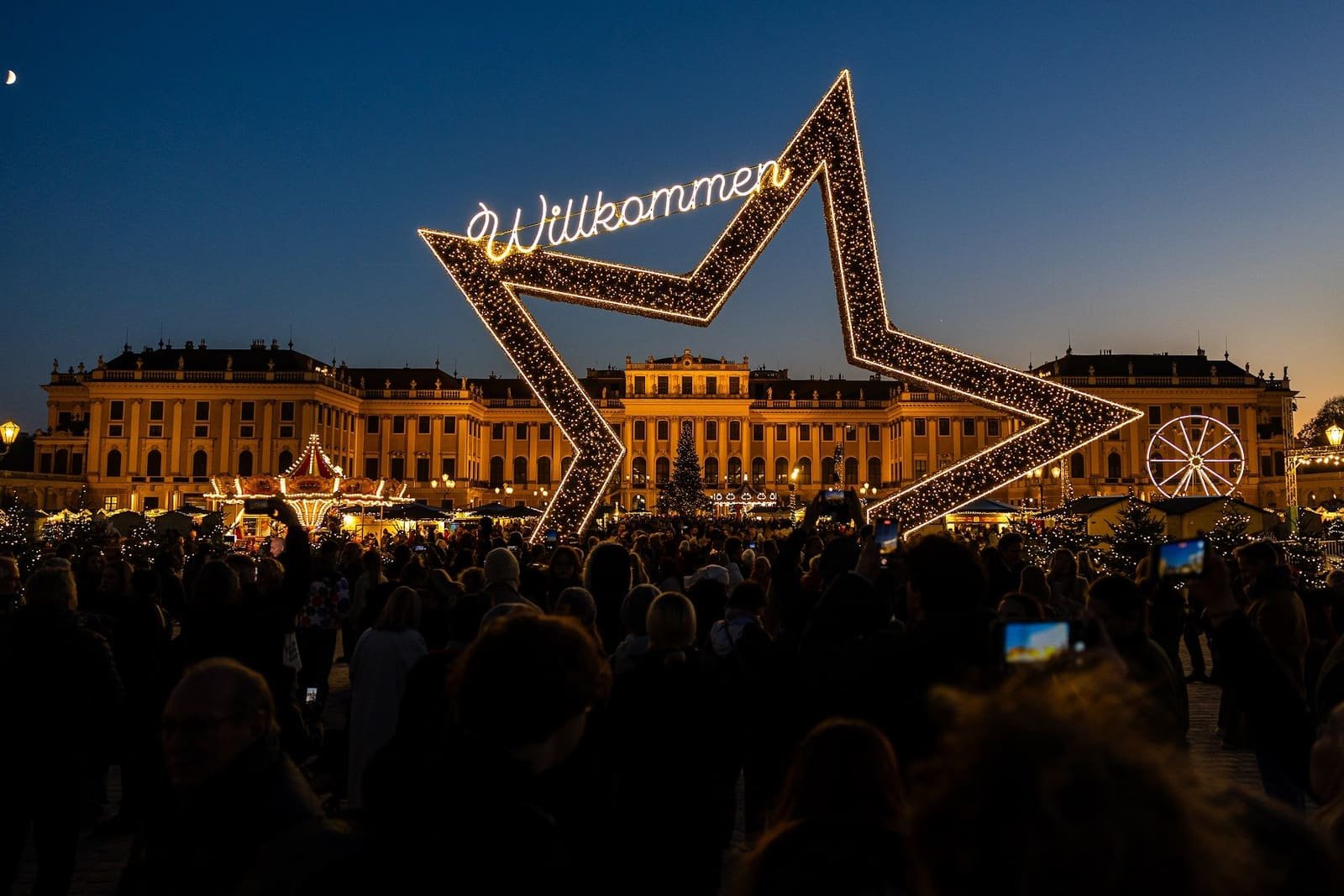
Christmas market at Schönbrunn Palace

The most elegant setting, and the only major market still open after Christmas.

6 Nov 2026 – 6 Jan 2027 · daily 10:00–21:00 · 24 Dec 10:00–16:00 · 25 Dec–6 Jan 10:00–19:00

Set out in the forecourt of Schönbrunn Palace, with the yellow façade as a backdrop and a tree in front of the main entrance. The stalls lean towards crafts rather than souvenirs, and the space is wide enough that even busy evenings feel civilised.

It is the first of the big markets to open (6 November 2026) and the last to close (6 January 2027), which makes it the answer for anyone travelling between Christmas and Epiphany, when Rathausplatz and most of the city-centre markets have already been taken down.

Combine it with the palace. Book a timed Palace Ticket for late afternoon and come out into the lights. The palace park is free; the walk up to the Gloriette is worth it on a clear day before dark. U4 to Schönbrunn, then five minutes on foot.

3 · Spittelberggasse & lanes, 7th district

Spittelberg Christmas market

Where the Viennese go: Biedermeier lanes, design stalls, punch in a doorway.

13 Nov – 23 Dec 2026 · Mon–Fri 14:00–21:30 · Sat, Sun & holidays 11:00–21:30

Not a square but a web of narrow cobbled lanes in Spittelberg, the Biedermeier quarter behind the MuseumsQuartier in Neubau. Stalls sit in front of the old houses, the goods are noticeably better — ceramics, prints, wool, small-batch food — and the crowd after work is local.

The catch is the space. The lanes are narrow and on Friday and Saturday evenings they fill completely. Weekdays it opens only at 14:00, so a late afternoon on a Tuesday or Wednesday is the sweet spot.

Afterwards, stay in the neighbourhood: the lanes are lined with wine bars and small restaurants, and the MuseumsQuartier courtyards are two minutes away.

4 · Resselpark in front of the Karlskirche, 4th district

Art Advent at Karlsplatz

The crafts market — makers selling their own work under the baroque dome.

13 Nov – 23 Dec 2026 · daily 12:00–20:00

An art-and-craft market in front of the Karlskirche, its dome reflected in the pond, with the Wien Museum on one side. The rule here is that stallholders sell what they make, so this is where to buy a present that did not come off a container ship.

It closes earlier than the others (20:00), so treat it as an afternoon stop. From here the State Opera is a five-minute walk and Café Museum, the Adolf Loos café of 1899, is on the way.

5 · Freyung, 1st district

Altwiener Christkindlmarkt on the Freyung

The traditional one — old-Vienna crafts, nativity figures and a quieter square.

14 Nov – 23 Dec 2026 · daily 10:00–21:00

The "Old Viennese" market on the triangular Freyung, between the Scottish church and Palais Ferstel. It is smaller and more old-fashioned than Rathausplatz by design: glass ornaments, nativity figures, candles and beeswax.

Pair it with Am Hof, a two-minute walk away. Together they make the best low-stress hour of market-going in the centre, and neither is on the tour-group circuit the way Rathausplatz and Stephansplatz are.

6 · Am Hof, 1st district

Christmas market Am Hof

The largest square in the old town, and the calmest market in it.

13 Nov – 23 Dec 2026 · Mon–Thu 11:00–21:00 · Fri–Sun & holidays 10:00–21:00

On the broad square Am Hof, in front of the white baroque façade of the Church of the Nine Choirs of Angels. The market has a craft-and-antiques leaning and plenty of room between stalls, which is rare in the Innere Stadt in December.

It is the one to choose if you want a Punsch in the historic centre without the crush — and it sits on the walk between Freyung and the Graben.

7 · Between the two museums on the Ring, 1st district

Christmas Village on Maria-Theresien-Platz

A drink between two of the grandest museum façades in Europe.

20 Nov – 26 Dec 2026 · Mon–Fri 11:00–21:00 · Sat–Sun 10:00–21:00

A food-and-drink village laid out between the twin domed palaces of the Kunsthistorisches Museum and the Natural History Museum, around the Maria Theresa monument. Less for shopping than for standing with a mug among the lights.

The logical plan: an afternoon in the KHM (since September 2026 every visit needs a pre-booked time slot, and it is open to 21:00 on Thursdays), then straight out into the market. The MuseumsQuartier and Spittelberg are across the road.

8 · Around St. Stephen's Cathedral, 1st district

Christmas Village on Stephansplatz

Convenience, not charm — stalls under the tiled roof of the cathedral.

6 Nov – 26 Dec 2026 · daily 11:00–21:00 · 24 Dec to 16:00 · 25–26 Dec to 19:00

A ring of stalls at the foot of St. Stephen's Cathedral, at the busiest pedestrian junction in the city. Honestly: it is small, it is crowded, and it exists because everyone passes through. Stop for a Punsch if you are there anyway — do not cross town for it.

What does justify the detour is the cathedral itself in Advent. The North Tower lift up to the Pummerin bell and any Advent concert in the nave (check the cathedral's calendar) are the reasons to come.
Not on the list this year

Belvedere: according to local press, the market in front of the Upper Belvedere is not being held in 2026 because of construction work on a new visitor centre (spring 2026 – autumn 2027). A replacement site was being discussed in the summer — check with the organiser before planning around it.

What to drink and eat

Punsch
The Viennese market drink: hot, sweet and usually rum-based, in flavours from orange to Kinderpunsch without alcohol. Mugs carry a deposit — at Rathausplatz it was €5 in 2025, refunded when you hand the mug back. Keep it only if you want the souvenir you just paid for.
Glühwein
Mulled wine, red or white. Slightly cheaper than punch at most stalls (in 2025 Rathausplatz prices started around €4.50 for Glühwein and €4.90 for punch; expect more elsewhere and in 2026).
Maroni
Roasted chestnuts in a paper cone from a street oven — the smell of a Viennese winter. Also sold outside the markets, on street corners across the centre.
Langos
Deep-fried flat dough rubbed with garlic, often topped with cheese — Hungarian in origin, a fixture at every Austrian market. Share one; it is heavier than it looks.
Kiachl
A round, puffy fried dough from the Alpine west of Austria, served either with cranberries and icing sugar or savoury with sauerkraut. The sweet one is the classic.
Bratwurst & Käsekrainer
Grilled sausages with mustard, horseradish and a roll. The Käsekrainer, with pockets of melted cheese inside, is the Viennese sausage-stand favourite.

Where to warm up

Two hours outdoors is the realistic limit at freezing point, and in Vienna the season is built around the room you walk into next.

A coffee house. This is what they are for — marble tables, newspapers on wooden holders, and nobody rushing you over a Melange. From Rathausplatz, Café Landtmann (1873) is across the Ring. From Karlsplatz or Spittelberg, Café Sperl (1880) on Gumpendorfer Straße is the most atmospheric of the lot. In the old town, Café Hawelka stays open late and is famous for its Buchteln, Café Frauenhuber claims to be the oldest in the city, and Demel on the Kohlmarkt is the imperial confectioner. One caution: Café Central is closed for renovation, with reopening announced for winter 2026 — check before you go.

A wine cellar. Most Heurigen in the vineyards on the edge of town open on rotating dates and many rest in winter, so check the "Ausg'steckt" calendar first. In the centre the vaulted cellars are the easier answer: the Zwölf-Apostelkeller, the Esterházykeller and the Melker Stiftskeller are all within a short walk of the Freyung and Am Hof markets. Confirm opening hours before you set out.

A concert. Advent is high season at the Musikverein, the Konzerthaus and the State Opera, and many churches hold Christmas programmes. Buy from the venue or an official agency — never from street sellers. Our concerts guide explains how.

Staying near the markets

Live prices and availability on a map centred on this exact spot — hotels, apartments and hostels, so you can judge the walk from here rather than guess from an address.

Bookings made through this map earn us a commission. Your price is unaffected.

Partner links · GetYourGuide

Christmas tours & concerts

Skip-the-line tickets, tours and experiences bookable ahead — free cancellation on most.

See all options: Vienna Christmas markets tours and Advent concerts

We may earn a commission from these. It never changes your price.

Frequently asked

When are the Vienna Christmas markets open in 2026?

The first markets open on 6 November 2026 (Schönbrunn Palace and Stephansplatz). The main Christkindlmarkt on Rathausplatz runs from 13 November to 26 December 2026, Spittelberg, Karlsplatz and Am Hof from 13 November to 23 December, the Freyung from 14 November to 23 December, and Maria-Theresien-Platz from 20 November to 26 December. Schönbrunn is the last to close, on 6 January 2027.

Which Vienna Christmas market is the best?

Rathausplatz for the spectacle, Schönbrunn for elegance and the longest season, Spittelberg for atmosphere and better crafts, and Karlsplatz for handmade presents. If you have one evening, start at Spittelberg in the late afternoon and walk ten minutes to Maria-Theresien-Platz and Rathausplatz as the lights come on.

Are the Vienna Christmas markets free?

Yes, entry to all of them is free. You pay only for food, drink and what you buy — plus a refundable deposit on the mug, which was €5 at Rathausplatz in 2025.

What should I drink and eat at a Vienna Christmas market?

Punsch or Glühwein (Kinderpunsch without alcohol for children), roasted Maroni chestnuts, garlic Langos, sweet Kiachl with cranberries, and a Käsekrainer sausage. Prices vary by market; the central ones are the most expensive.

Are the markets open on Christmas Eve and Christmas Day?

Hours shorten on 24 December — Rathausplatz closes at 18:30, Stephansplatz at 16:00, Schönbrunn at 16:00. Spittelberg, Karlsplatz, Am Hof and the Freyung have already closed by then (23 December). Rathausplatz, Stephansplatz and Maria-Theresien-Platz reopen on 25–26 December; only Schönbrunn continues into January.

What else is there to do in Vienna in December?

A grand coffee house is the natural end to a cold evening. The ball season has already opened (on 11 November), the Staatsoper, Musikverein and Konzerthaus run full Advent programmes, and on 31 December the free Silvesterpfad trail traditionally fills the old town. Buy concert tickets from the venue or an official agency, never from street sellers.

Before you go

We may earn a commission from these. It never changes your price.

The My Cities collection

Where the journey goes next

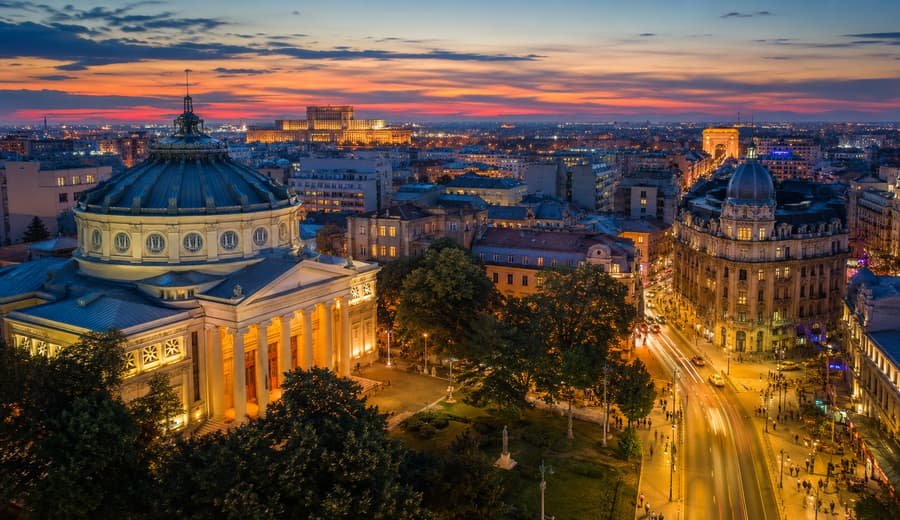
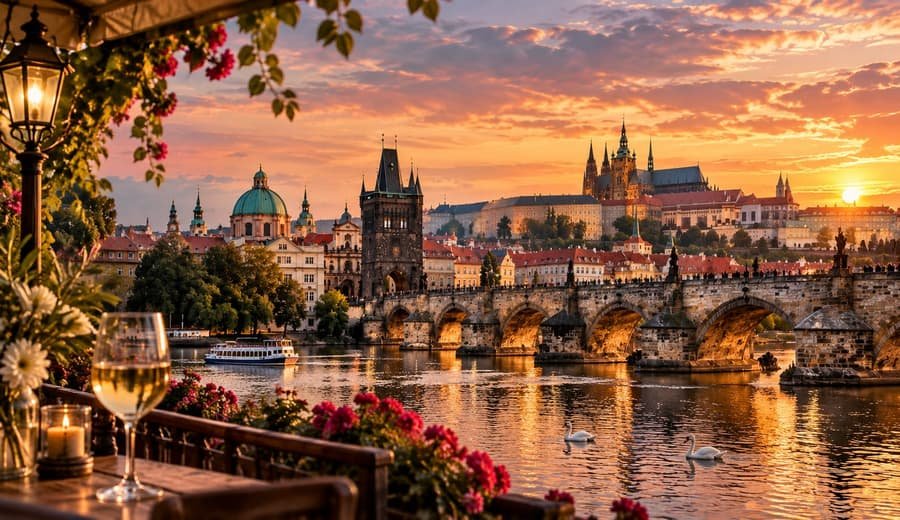
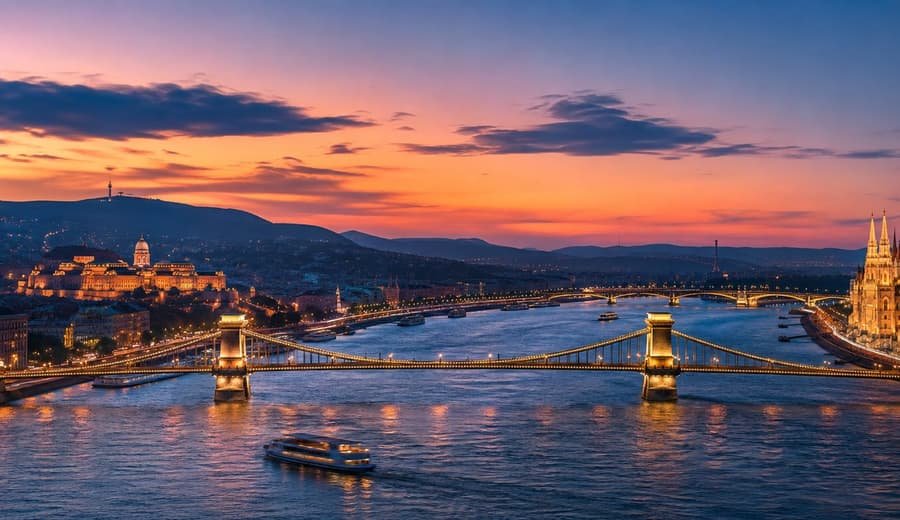
Vienna, Budapest and Prague are the classic Central European trio, a train ride apart — and Bucharest is where many of our readers start from. Same format, same honesty about the money, written city by city.