Guides
A Bratislava Day Trip from Vienna: Train or Boat, and What to See
Tony Denesa – Travel Advisor10 min read
The short version
Vienna and Bratislava are among the closest pairs of capitals in Europe, only about 55–60 km apart, and the Slovak capital makes the easiest day trip you can take from Vienna. You do not need a tour or much planning.
- Fastest and cheapest: the regional train from Wien Hauptbahnhof, about an hour, at least hourly.
- Most scenic: the Twin City Liner catamaran from the Danube Canal, 75 minutes, in the warmer months.
- Best plan: boat one way, train the other.
- What to see: the old town, St. Martin's Cathedral, the castle terrace, the Blue Church and the view from the UFO bridge. Half a day is enough; a full day is relaxed.
- Bring: a passport or national ID card. Slovakia uses the euro, as Austria does.
Getting there
By train
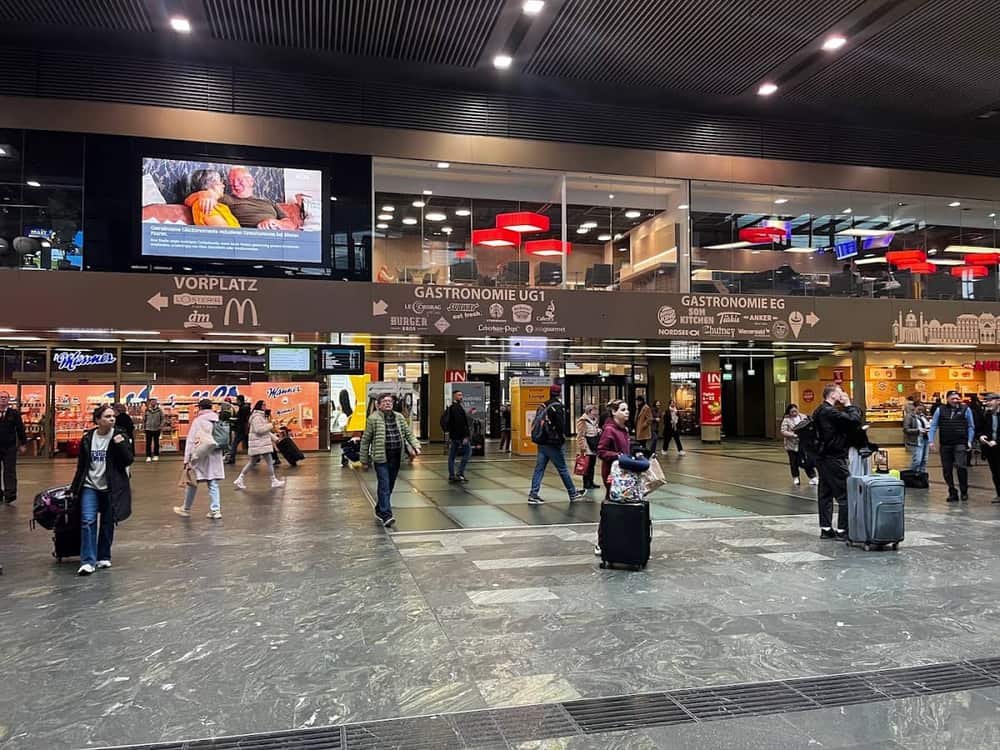
Regional trains leave Wien Hauptbahnhof at least once an hour and take roughly an hour. There are two routes, and it matters which one you take:
- Via Marchegg to Bratislava hlavná stanica (main station), north of the old town. From there it is a walk of roughly twenty minutes downhill, or a short tram or bus ride, to the centre.
- Via Kittsee to Bratislava-Petržalka, on the south bank among the housing estates. From there you take a bus across the river into town.
Both are fine; check which train you are on in the ÖBB Scotty planner. These are regional trains, so you do not need to reserve seats. Return tickets and special cross-border offers have existed on this line, so compare options at the ÖBB ticket machine or app before buying two singles.
2026–27 note: the central S-Bahn line between Praterstern and Hauptbahnhof is closed until the end of October 2027. The Bratislava trains start at the Hauptbahnhof itself, but check how you will reach the station from your hotel — the U1 is usually the simplest. Our train stations guide has the details.
By boat
The Twin City Liner leaves from the Schiffstation Wien City on the Danube Canal, between the Marienbrücke and the Schwedenbrücke, and arrives on the Bratislava riverfront, right below the old town, in 75 minutes (wien.info, checked September 2026). It runs up to three times a day in the season from spring to autumn. On the way you pass the Donau-Auen national park, a wild floodplain forest, and the ruined castle of Devín on its rock at the Slovak border. Fares vary between weekdays and weekends and a fuel surcharge was added in 2026, so check the operator's website when booking — summer weekend sailings sell out. Our Danube cruise guide puts this boat in context.
By bus
Several coach companies, including Slovak Lines, FlixBus and RegioJet, run between Vienna and Bratislava in about an hour. Buses are handy if you are staying near a coach stop or heading on to Bratislava Airport: Slovak Lines runs a direct bus from Wien Hauptbahnhof to the Bratislava Airport terminal in about 70 minutes, twelve times a day, from €7.90 (slovaklines.sk, checked September 2026). That airport is a real alternative for low-cost flights; see our airport page.
What to see in Bratislava
For almost three centuries Bratislava — Pressburg to the Austrians, Pozsony to the Hungarians — was the coronation city of the Kingdom of Hungary, and after the Ottomans took Buda in the 16th century it served as the kingdom's capital. The Habsburgs were crowned here, which ties the city closely to Vienna's own story; read Habsburg Vienna for the wider picture. Today it is a compact, lively old town surrounded by a much larger modern city.
A walking route (about four hours with breaks)
- Michael's Gate. Enter the old town through the last surviving medieval gate and walk down Michalská street, lined with cafés.
- Main Square and the Old Town Hall. The heart of the old town, with the Roland Fountain and the Old Town Hall, which houses the city museum.
- Primate's Palace. A pink neoclassical palace whose Hall of Mirrors saw the signing of the Peace of Pressburg in 1805, after Napoleon's victory at Austerlitz.
- The bronze figures. Look down: Čumil, the worker peering out of a manhole, is the city's most photographed resident.
- St. Martin's Cathedral. A Gothic cathedral where Hungarian kings and queens were crowned between 1563 and 1830, Maria Theresa among them. A gilded crown sits on top of the spire.
- Bratislava Castle. Climb the steps to the four-towered castle, largely reconstructed in the 20th century. The building matters less than the terrace: on a clear day you can see into Austria and Hungary.
- UFO bridge (Most SNP). Cross the river on foot to the bridge's saucer-shaped tower, which has an observation deck and a restaurant.
- The Blue Church. A ten-minute walk east of the old town, the Art Nouveau Church of St. Elizabeth by Ödön Lechner is painted in pale blue inside and out, like a wedding cake.
If you have more time, take a local bus to Devín Castle, a romantic ruin above the confluence of the Morava and the Danube.
Food and drink
Try bryndzové halušky — small potato dumplings with sheep's cheese and bacon — in a traditional restaurant, a glass of wine from the Small Carpathians, and a Bratislava rožok, a crescent pastry filled with walnuts or poppy seed. Kofola, the Slovak cola, is on every menu. Prices are generally lower than in Vienna.
A sample day
- Morning: Twin City Liner from the Danube Canal (check the season's departure times), or an early train from Hauptbahnhof.
- Late morning: arrive, coffee in the old town, then Michael's Gate, Main Square, Primate's Palace and the cathedral.
- Lunch: halušky and a glass of Slovak wine.
- Afternoon: castle terrace, then down and across the UFO bridge; the Blue Church on the way back to the station.
- Early evening: train back to Vienna, in time for dinner or an evening at a Heuriger. To choose a base with easy station access, see where to stay in Vienna.
Is it worth it?
Yes, if you are staying four days or more, or if you have already seen Vienna before. Bratislava does not compete with Vienna's museums or palaces, and you should not expect it to; the pleasure lies in a smaller, more relaxed old town, a different language and a boat ride on the Danube. If you only have two or three days, stay in Vienna. For a longer stay, compare with the Wachau day trip, which is more beautiful but more work, and see Vienna in five days.
Practical tips
- Documents: Austria and Slovakia are both in the Schengen area, but you must carry a valid passport or ID card.
- Phones: Slovakia is in the EU, so EU roaming rules apply.
- Sundays: most shops in Vienna are closed on Sundays, which makes Sunday a good day to be elsewhere.
- Back in Vienna: plan your transport with our getting around guide, and if you are travelling from Romania, our page for Romanian visitors covers the journey to Vienna.
Where to stay nearby
Live prices and availability on a map centred on this exact spot — hotels, apartments and hostels, so you can judge the walk from here rather than guess from an address.
Bookings made through this map earn us a commission. Your price is unaffected.