The city
Habsburg Vienna: 640 Years of a Dynasty and Its City
Tony Denesa – Travel Advisor11 min read
The short version
For 640 years, from 1278 to 1918, Vienna and the House of Habsburg grew up together. The family arrived as ambitious Swiss-Swabian counts and left as the rulers of a multinational empire of some fifty million people. Almost everything a visitor photographs in the centre — the Hofburg, the Ringstrasse, the museums, the opera, the baroque churches — exists because a Habsburg wanted it, vowed it, or paid for it. This is the story in sequence, with the places where you can still stand inside each chapter.
1278: a count from the Aargau takes Vienna
Rudolf of Habsburg was elected King of the Romans in 1273, a compromise candidate the German princes thought would be harmless. He was not. In 1278 he defeated Ottokar II of Bohemia, who held the Austrian duchies, at the Battle on the Marchfeld, north-east of Vienna. Rudolf enfeoffed his sons with Austria, and the dynasty settled in the city it would never really leave.
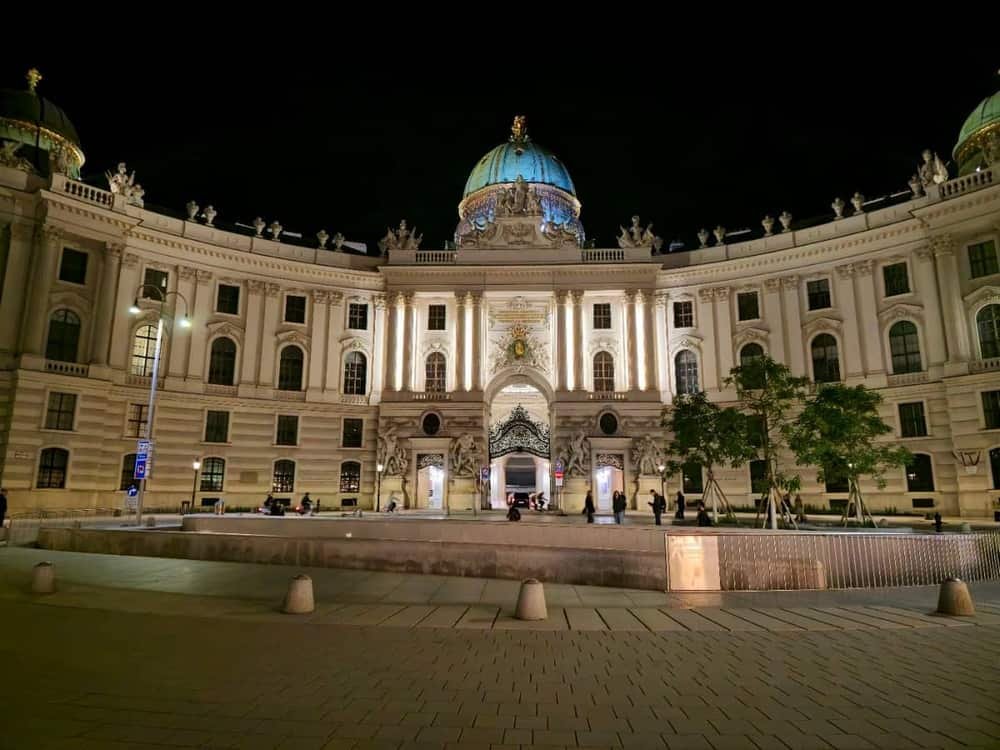
The medieval Habsburgs were not yet grand. Their castle was a square fortress by the city wall — its core survives as the Swiss Wing of the Hofburg, entered through the red-and-black Renaissance Swiss Gate of 1552. Duke Rudolf IV, "the Founder", gave the city its two great medieval ambitions: he founded the University of Vienna in 1365 and pushed the Gothic rebuilding of St. Stephen's Cathedral. The ducal crypt beneath the cathedral still holds early Habsburg remains.
Marry, do not fight
Emperor Frederick III secured a bishopric for Vienna in 1469, and his son Maximilian I perfected the family method: marriage. A Latin line later summed it up — let others wage war, you, happy Austria, marry. Maximilian's own marriage brought Burgundy and the Low Countries; the double wedding he arranged in St. Stephen's in 1515 eventually delivered Bohemia and Hungary. In 1498 he also founded the court chapel choir whose descendants are the Vienna Boys Choir, still singing Sunday Mass in the Hofburg chapel.
The sixteenth century brought the Ottomans to the walls. The first siege, in 1529, failed; the second, in 1683, is its own story — read The Siege of Vienna, 1683. Between the two, Vienna became a fortress city, ringed by bastions that would stand until 1857.
The baroque explosion
Relief after 1683 turned into stone. Leopold I had already vowed the Plague Column on the Graben after the epidemic of 1679; it was finished in 1693. His son Charles VI vowed a church to St. Charles Borromeo during the plague of 1713 — the result is the Karlskirche, designed by Johann Bernhard Fischer von Erlach and completed by his son Joseph Emanuel in 1737. Charles VI also commissioned the State Hall of the court library, now the Austrian National Library, one of the most beautiful baroque rooms in Europe.
Out of town, Leopold I asked Fischer von Erlach to design a hunting residence for the heir at Schönbrunn. The palace you visit today, however, is mostly Maria Theresa's.
Maria Theresa and Joseph II
Charles VI had no sons, and spent years persuading Europe to accept the Pragmatic Sanction of 1713, which let his daughter inherit. When Maria Theresa succeeded in 1740, Prussia invaded anyway. She fought for eight years, kept her lands, bore sixteen children, and reformed the administration, the army and schooling. Her marriage to Francis Stephen of Lorraine founded the House of Habsburg-Lorraine; they married in the Augustinian Church in 1736.
She rebuilt Schönbrunn Palace with Nikolaus Pacassi into the rococo summer residence you see, added the menagerie in 1752 — today's Schönbrunn Zoo, the oldest still operating anywhere — and, late in her reign, the Gloriette of 1775. In 1762 a six-year-old Mozart played for her family at Schönbrunn.
Her son Joseph II was an impatient reformer. He opened the Prater to the public in 1766 and the Augarten in 1775, founded the General Hospital, the Josephinum medical academy and the circular "Fools' Tower" now housing the Narrenturm collection. Many of his reforms died with him in 1790; the parks did not. There is more in Maria Theresa and Joseph II.
Napoleon, the Congress and a new empire
Napoleon occupied Vienna twice, in 1805 and 1809. Francis II had already proclaimed himself Emperor of Austria in 1804 as Francis I; in 1806 he laid down the crown of the Holy Roman Empire, which had existed for a thousand years. That crown — along with the Austrian imperial crown made in 1602 — is displayed in the Imperial Treasury in the Hofburg, which is reason enough to visit.
After Napoleon's defeat, the Congress of Vienna (1814–1815) redrew Europe in the city's palaces and ballrooms. The joke that "the Congress dances but does not advance" was unfair: it produced a settlement that held, broadly, for decades. The Biedermeier years that followed were quiet, policed and domestic, and ended in the revolution of 1848.
Franz Joseph: 68 years and a new city
Franz Joseph came to the throne in December 1848, aged eighteen, and reigned until 1916. His reign is the Vienna most visitors imagine. In 1857 he ordered the fortifications demolished; the Ringstrasse was opened in 1865 and lined, over the next decades, with the State Opera (1869), the Votive Church, built in thanks for his survival of an 1853 assassination attempt, the Parliament, the City Hall, the Burgtheater and the twin museums. The Kunsthistorisches Museum, opened in 1891, exists to show the dynasty's collections. The Neue Burg wing of the Hofburg, begun in 1881, was never finished as planned.
In 1854 he married his cousin Elisabeth in the Augustinian Church — the marriage behind a century of legend; see Empress Sisi. After the defeat by Prussia in 1866 came the Compromise of 1867 and the Dual Monarchy of Austria-Hungary. Private tragedies accumulated: his brother Maximilian executed in Mexico in 1867, his son Rudolf dead at Mayerling in 1889, his wife stabbed in Geneva in 1898, his heir Franz Ferdinand shot in Sarajevo in 1914. He died at Schönbrunn on 21 November 1916, in the middle of the war that ended the empire.
1918: the end at Schönbrunn
His great-nephew Karl I reigned for only two years. On 11 November 1918, at Schönbrunn, he signed a statement renouncing any part in affairs of state. He never formally abdicated. The next day the Republic was proclaimed outside the Parliament. The Habsburg Law of 1919 expropriated the family's state property and exiled those who would not renounce their claims — which is why the palaces now belong to the Republic and are run as museums.
Where the Habsburgs are buried
Habsburg funerals were divided in three. The bodies lie in the Imperial Crypt beneath the Capuchin Church, founded in 1618 — some 150 members of the family, from plain early coffins to the double baroque sarcophagus of Maria Theresa and Francis Stephen. Hearts were placed in urns in the Augustinian Church; entrails went to the catacombs of St. Stephen's. The crypt is still in use: Empress Zita was buried there in 1989 and Otto von Habsburg, Karl's son, in 2011.
Seeing Habsburg Vienna today
- One day, central: the Hofburg complex — Imperial Apartments, the Sisi Museum, the Treasury, the Spanish Riding School — then the Imperial Crypt, five minutes away. All in Innere Stadt.
- Half a day, out west: Schönbrunn in Hietzing, with the park, the Gloriette and the Imperial Carriage Museum. Tickets: Schönbrunn Palace tickets.
- The palace that was not theirs: the Upper Belvedere was built for Prince Eugene of Savoy, the general who served three Habsburg emperors, and bought by the dynasty after his death.
- The furniture: the Furniture Museum, the court's old storage depot, is the least crowded and most revealing of the imperial sites.
For an overview of every residence, start with our palaces hub, and pair it with the court's musical legacy on concerts.
An honest note
Habsburg Vienna is magnificent, and it is sold relentlessly — on chocolate boxes, umbrellas and a thousand portraits of Sisi. The dynasty was also absolutist, often reactionary, and ruled peoples who did not want to be ruled. The best Vienna museums now say so plainly. Go for the rooms, but read the captions.
Where to stay nearby
Live prices and availability on a map centred on this exact spot — hotels, apartments and hostels, so you can judge the walk from here rather than guess from an address.
Bookings made through this map earn us a commission. Your price is unaffected.