Guides
Vienna with Kids: A Family Guide by Age
Tony Denesa – Travel Advisor10 min read
The short version
Vienna is one of the easiest capitals in Europe to visit with children, and not because it tries hard to be. It is safe, clean and compact; public transport is excellent and largely free for children; the federal museums charge nothing to anyone under 19; and the city's great green spaces — the Prater, the Danube Island, the palace parks — are free. What it asks of parents is planning: palaces and grand museums are built for adults, so the trick is to alternate one "grown-up" sight with one that is genuinely for them.
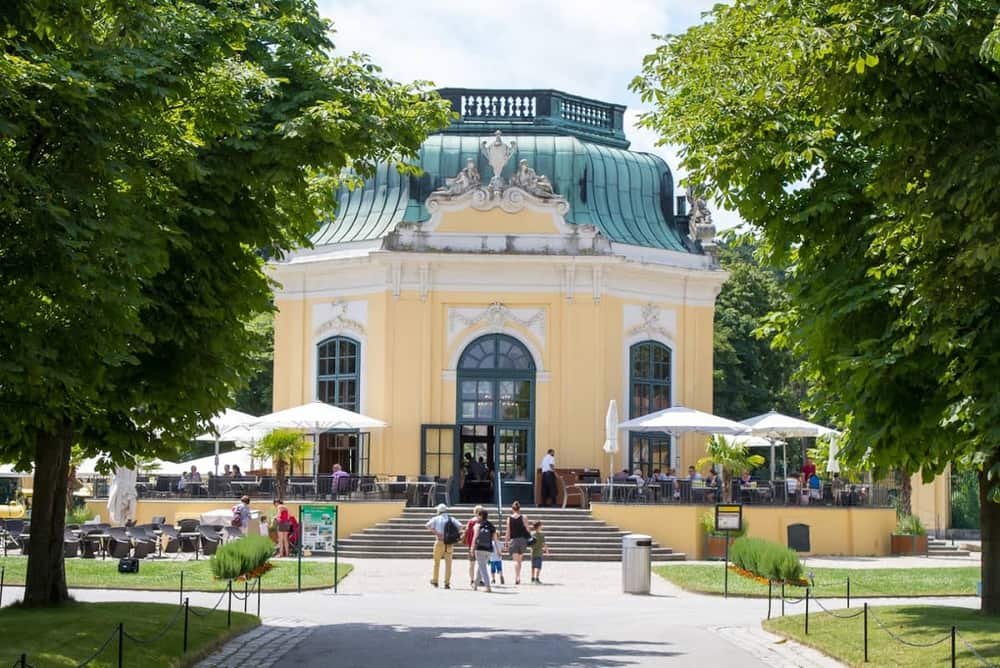
- The one essential: Schönbrunn Zoo, the oldest zoo in the world, with the palace park next door.
- The best free afternoon: the Prater — playgrounds, the long avenue, and the amusement park where you pay only for rides.
- The rainy-day winners: the Haus des Meeres aquarium and the dinosaurs of the Natural History Museum.
- The summer answer: the water on the Danube Island.
What families pay in 2026
- Public transport: children under 6 travel free every day. Under-15s also travel free on Sundays, public holidays and during Vienna school holidays. Otherwise the reduced single for ages 6–14 is €1.50 digital or €1.60 on paper; an adult 24-hour ticket is €9.70 digital (Wiener Linien, checked September 2026). If you buy a Vienna City Card, one child under 15 travels free with each card.
- Federal museums: free for under-19s — including the Kunsthistorisches Museum, the Albertina and the Belvedere.
- Schönbrunn Zoo: adults €29, ages 6–19 €17, under 6 free (zoovienna.at, checked September 2026).
- Sisi Museum and Imperial Apartments: adults €20, ages 6–18 €12 (sisimuseum-hofburg.at, checked September 2026).
The pattern is clear: the expensive part of a family trip here is adult admissions and hotel rooms, not the children. See Vienna prices for the wider picture.
Toddlers and preschoolers (0–5)
The rule for small children is short visits and lots of space.
- Schönbrunn Zoo: opened in 1752, and still one of the best-kept zoos in Europe, with pandas, elephants and a rainforest house, set in the park of the palace. It opens at 09:00 every day; arrive at opening, when the animals are active and the paths are empty. Closing time moves with the season, from 16:30 in November to January to 18:30 from April to September.
- The Children's Museum at Schönbrunn Palace: dressing up as archdukes and archduchesses, and a gentle introduction to how the imperial family lived.
- The Schönbrunn maze and the free palace park, where you can walk for hours with a stroller.
- The Prater: the playgrounds along the Hauptallee, and the little Liliputbahn miniature railway through the park.
- ZOOM Children's Museum in the MuseumsQuartier, built around hands-on sessions for different ages, including an area for the very youngest. Sessions are timed and often full; book ahead.
School-age children (6–11)
This is the golden age for Vienna: old enough for a museum, young enough to love a Ferris wheel.
- Natural History Museum: dinosaur skeletons, meteorites, a vast mineral collection and the tiny Venus of Willendorf, in a palace on the Ring.
- Haus des Meeres: an aquarium and tropical house built inside a Second World War flak tower in Mariahilf — sharks, monkeys roaming a jungle hall, and a view from the top.
- Technisches Museum Wien: steam engines, flight, energy and a lot of buttons to press. A full morning.
- Haus der Musik: an interactive museum of sound where children can "conduct" the Vienna Philharmonic on screen. Open daily until 22:00, which makes it a rare evening option.
- The Wurstelprater: the amusement park at the end of the Prater. Entry is free; you pay per ride. The Giant Ferris Wheel of 1897 is gentle enough for any age.
- The Spanish Riding School: the morning exercise, with tickets from €17 (srs.at, checked September 2026), is a relaxed way to see the Lipizzaner horses without committing to a full performance.
Teenagers (12–18)
Teenagers tend to want height, speed, a bit of darkness and freedom — Vienna has all four.
- The Danube Tower: 150 metres high, with express lifts that reach the top in 35 seconds.
- Time Travel Vienna: a multimedia history show in vaulted cellars in the old town — lighter than a museum, and a good introduction before the real sights.
- The Waldseilpark Kahlenberg: a high-ropes course in the woods above the city.
- The Third Man Museum for film fans, and the sewers-and-Ferris-wheel story of post-war Vienna.
- Getting around alone: the U-Bahn is simple, safe and runs all night on Friday and Saturday nights. A teenager with the WienMobil app and a ticket can manage the city.
- Free museum entry: under-19s pay nothing at the federal museums, so a teenager who likes art can see Klimt at the Belvedere free.
By season
Summer: go where the Viennese families go — the Danube Island and the Alte Donau, with free bathing areas and public pools. Plan indoor sights for the hottest hours; the palace interiors are not air-conditioned.
Winter: the Christmas markets serve Kinderpunsch, an alcohol-free hot punch, and the Rathausplatz ice rink runs beside the market from 13 November 2026 to 6 January 2027 (closed 31 December). The large Wiener Eistraum rink follows from 22 January to 7 March 2027.
Any season: check the Vienna weather forecast the evening before, and keep a rainy-day museum in reserve. The events calendar lists family events and festivals by date.
Eating out with children
Vienna is relaxed about children in restaurants, cafés and wine taverns. A Wiener Schnitzel is the easiest order in the city, portions are usually generous enough to share, and the cake counters of the coffee houses are a reliable reward. The Heurigen are particularly good for families: long tables in gardens, a self-service buffet, space for children to move, and grape juice alongside the wine. Browse the Heurigen collection and our coffee houses.
Hot food in traditional restaurants is often served only at lunch and dinner times, roughly 11:00–14:00 and 18:00–22:00, although many places serve all day. Shops are closed on Sundays, except at the big railway stations and the airport — buy nappies and snacks on Saturday.
A three-day family plan
- Day 1 — Schönbrunn: the zoo at opening, a picnic in the palace park, the maze and the Children's Museum after lunch. Leave the adult palace tour for another trip.
- Day 2 — the centre and the Ring: the Natural History Museum in the morning, a cake and hot chocolate in a café, then the Haus der Musik in the late afternoon.
- Day 3 — the Prater: the playgrounds and the Hauptallee, a ride on the Giant Ferris Wheel, and in summer an afternoon on the Danube Island; in winter, the Haus des Meeres.
Practical notes
- Where to stay: Leopoldstadt is the practical family base — next to the Prater, one stop from the centre on the U1 or U2. Look for family rooms and apartments in the hotel collection, and read where to stay in Vienna.
- Getting around: most trams and buses are low-floor and the U-Bahn has lifts; see getting around.
- Health: the European emergency number is 112, ambulance 144, and the doctor-on-call service 141 out of hours; the health hotline 1450 gives medical advice by phone. More in essentials.
- Tap water is drinkable, so refill bottles rather than buying water.
Where to stay nearby
Live prices and availability on a map centred on this exact spot — hotels, apartments and hostels, so you can judge the walk from here rather than guess from an address.
Bookings made through this map earn us a commission. Your price is unaffected.