Guides
Vienna Christmas Markets 2026: Which Market for Which Evening
Tony Denesa – Travel Advisor9 min read
The short version
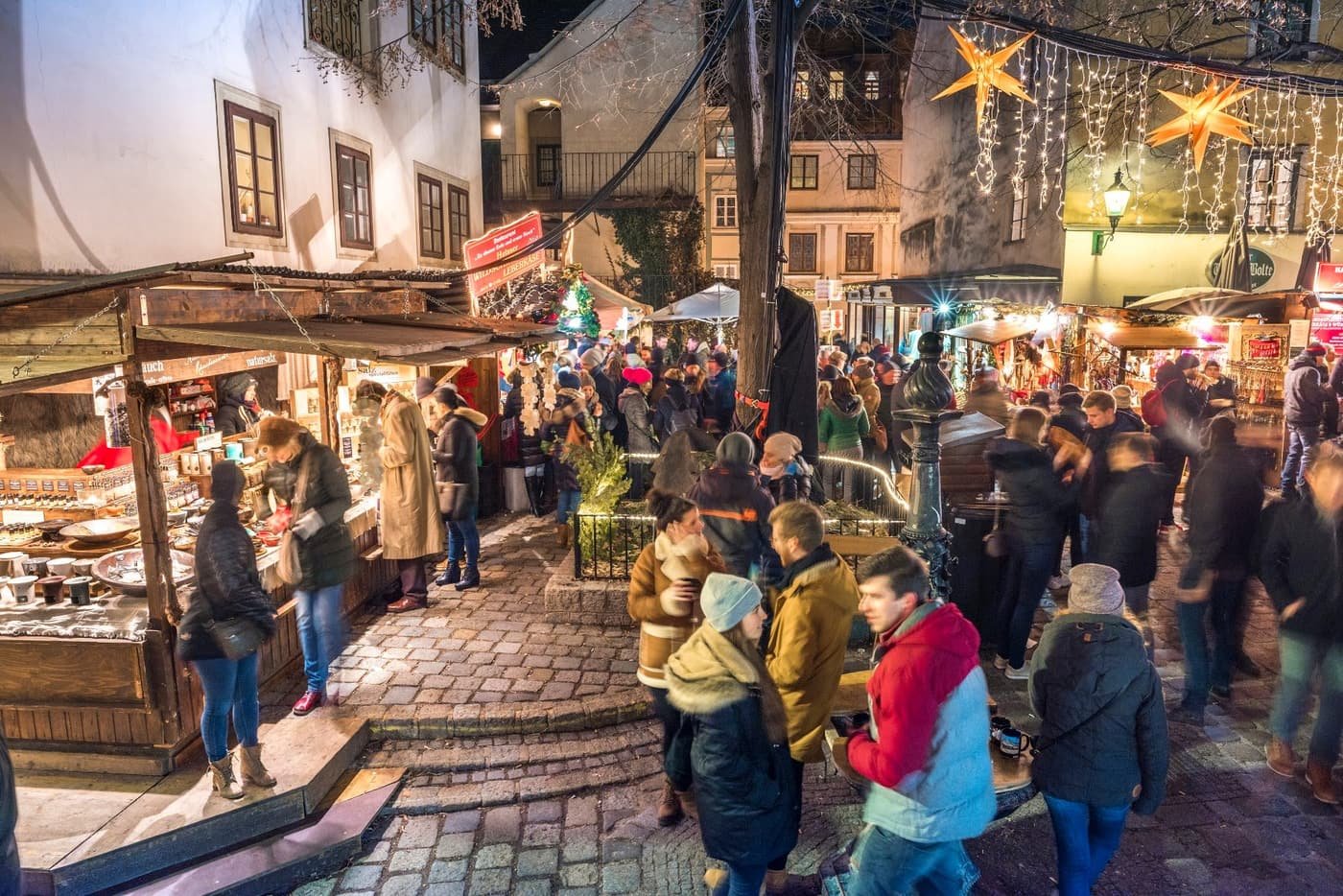
Vienna does not have one Christmas market; it has a season. From early November the squares of the old town, the forecourt of a Habsburg palace and a web of Biedermeier lanes fill with stalls, and each has a distinct character. The mistake most visitors make is to treat them as interchangeable and spend every evening at the biggest one. The better approach is to match the market to the evening you want.
- The spectacle, once: the Christkindlmarkt in front of the City Hall.
- The most elegant, and the only one open after Christmas: Schönbrunn Palace.
- Where the Viennese actually go: the lanes of Spittelberg.
- Presents made by the people selling them: Art Advent in front of the Karlskirche.
- A calm hour in the historic centre: the Freyung and Am Hof, two minutes apart.
Our Christmas markets section keeps the live season counter and a full profile of every market; this guide is the planner's version — how to string them into evenings that work.
The 2026 calendar at a glance
These dates were published by the Vienna Tourist Board on wien.info (checked September 2026):
- Schönbrunn Palace: 6 November 2026 – 6 January 2027, daily 10:00–21:00; 24 December to 16:00; 25 December – 6 January to 19:00.
- Stephansplatz: 6 November – 26 December, daily 11:00–21:00; 24 December to 16:00.
- Rathausplatz: 13 November – 26 December, daily 10:00–22:00; 24 December to 18:30.
- Spittelberg: 13 November – 23 December, weekdays from 14:00, weekends and holidays from 11:00, until 21:30.
- Art Advent, Karlsplatz: 13 November – 23 December, daily 12:00–20:00.
- Am Hof: 13 November – 23 December, Monday–Thursday 11:00–21:00, Friday–Sunday 10:00–21:00.
- Altwiener Christkindlmarkt, Freyung: 14 November – 23 December, daily 10:00–21:00.
- Maria-Theresien-Platz: 20 November – 26 December, weekdays from 11:00, weekends from 10:00, until 21:00.
Two consequences follow. First, the smaller markets close on 23 December, so a trip over Christmas itself is really a Rathausplatz and Schönbrunn trip. Second, late November is the smart window: every market is running by the 20th, the ball season has opened (11 November), and hotel prices and crowds are lower than in the weeks before Christmas.
One absence to note: according to local press, the market in front of the Upper Belvedere is not being held in 2026 because of construction work on a new visitor centre. Check with the organiser before planning around it.
Which market for which evening
The first evening: Spittelberg into the Ring. Start in the lanes of Spittelberg in Neubau around 16:00, while they are still walkable. Buy something small — ceramics, prints, wool — then walk ten minutes through the MuseumsQuartier to Maria-Theresien-Platz, between the two great museum façades. Finish at Rathausplatz after dark, when the City Hall is fully lit. It is a two-hour loop on foot and shows you three very different markets.
The museum evening: KHM, then Maria-Theresien-Platz. Since September 2026 the Kunsthistorisches Museum requires a pre-booked time slot for every visit, and it stays open until 21:00 on Thursdays. Take a late-afternoon slot, and walk straight out into the Christmas village on the square.
The palace evening: Schönbrunn at dusk. Book a late time slot for the palace rooms, come out into the lights of the forecourt, and walk into the palace park, which is free. The stalls here lean to crafts, the space is generous and even a Saturday feels orderly. U4 to Schönbrunn, then five minutes on foot.
The quiet evening: Freyung and Am Hof. Two traditional markets two minutes apart in the old town — glass ornaments, nativity figures, beeswax candles — and neither is on the tour-group circuit. Start at the Freyung beside the Scots Church, walk to Am Hof, then down to the Graben.
The afternoon with a purpose: Karlsplatz. Art Advent closes at 20:00, so treat it as an afternoon stop. Stallholders sell work they make themselves, which makes this the best place in the city for a present that means something. The State Opera is five minutes away if you are going on to a performance.
Stephansplatz is the one to take if you are passing anyway. It is small and busy, and the reason to linger is the cathedral itself in Advent, not the stalls.
Punsch, Glühwein and the mug
The drink of a Viennese market is Punsch: hot, sweet, usually built on rum, in flavours from orange to berry. Glühwein — mulled wine, red or white — is its slightly cheaper, slightly plainer cousin, and Kinderpunsch is the alcohol-free version for children and drivers.
Your first drink comes in a ceramic mug with a deposit, the Häferlpfand. In the 2025 season it was €5 at Rathausplatz, where Glühwein started at around €4.50 and punch at around €4.90; other markets were reported at up to about €7.50 for a punch (source: Viennese press reports by Heute and events.at, checked September 2026 — 2026 prices had not yet been published). Every market has its own mug design, which is why collectors keep them. If you do not want it, hand it back at any stall of the same market and the deposit is returned.
To eat: Maroni (roasted chestnuts in a paper cone), garlic Langos, sweet Kiachl with cranberries, and the Viennese sausage-stand classic, the cheese-filled Käsekrainer. Portions are generous; share.
Timing, weather and crowds
December in Vienna is cold and dark rather than snowy postcard material: the 1991–2020 average high is 4°C, the average low just below freezing, and there are fewer than two hours of sunshine a day (GeoSphere Austria normals). November averages around 9°C. The monthly detail is on the December weather page and the November weather page; check the live Vienna weather forecast before you choose between a market night and a concert night.
- Best hour: 15:30–17:30 on a weekday. Daylight, then the lights, then gone before the after-work wave.
- Worst hour: Friday and Saturday from 19:00 in December, especially at Rathausplatz and Spittelberg.
- 24 December: the markets still open close in the afternoon or early evening, and the city goes home for Christmas Eve. Plan dinner in advance — many restaurants close.
- Between Christmas and 6 January: Schönbrunn is the only market left. The Rathausplatz ice rink, Eistraum am Christkindlmarkt, stays open until 6 January 2027 (closed 31 December), and the big Wiener Eistraum rink returns from 22 January to 7 March 2027.
Warming up afterwards
A market evening ends best in a coffee house. Café Landtmann, across the Ring from City Hall, has been open since 1873 and serves until midnight Monday to Saturday. Café Sperl (1880) is a short walk from Spittelberg and Karlsplatz, and Café Hawelka in the old town is the place for warm Buchteln late in the evening. One change for 2026: Café Central has been closed for renovation since March 2026, with its reopening announced for winter 2026 — check before you go. The full list is in our coffee-house guide.
December is also the height of the music season. The Staatsoper, the Musikverein and the Konzerthaus all run full Advent programmes; see concerts in Vienna and the events calendar for what is on. Buy only from the venue or an official agency, never from sellers in costume on the street.
Getting there and staying close
Every market in the centre is on the U-Bahn: Stephansplatz (U1/U3) for the cathedral, Herrengasse (U3) for the Freyung and Am Hof, Volkstheater and Museumsquartier for Spittelberg and Maria-Theresien-Platz, Karlsplatz (U1/U2/U4) for Art Advent, and U4 Schönbrunn for the palace. A 24-hour ticket costs €9.70 digital or €10.20 on paper (Wiener Linien fares, checked September 2026); there is no longer a 48- or 72-hour ticket. More in getting around Vienna.
If markets are the point of the trip, stay inside or just outside the Ring — Innere Stadt or Neubau — so you can walk back at ten without thinking about it. Our where to stay in Vienna guide compares the districts, and the hotel collection has the options. For the rest of the season, from balls to skating, read Vienna in winter.
Where to stay nearby
Live prices and availability on a map centred on this exact spot — hotels, apartments and hostels, so you can judge the walk from here rather than guess from an address.
Bookings made through this map earn us a commission. Your price is unaffected.