Guides
Three Days in Vienna: The Classic First Visit, Done Properly
Tony Denesa – Travel Advisor11 min read
The short version
Three days is the right amount of time for a first visit to Vienna: enough to see the imperial core, one great palace, one great museum, hear music in a proper hall and spend an evening among the vineyards — without the trip turning into a checklist. The plan below groups sights by neighbourhood so you walk more than you ride, and it builds in the things that changed in 2026.
- Day 1 — Imperial centre: St. Stephen's, the Hofburg, the Albertina, coffee, the Opera.
- Day 2 — Schönbrunn and Karlsplatz: palace and gardens, Naschmarkt, the Secession, a concert.
- Day 3 — Belvedere and beyond: Klimt, Hundertwasser, the Prater, an evening at a Heuriger.
Before you go, know this:
- 48-hour and 72-hour transport tickets no longer exist (abolished on 1 January 2026). Buy a 24-hour ticket at €10.20 paper / €9.70 digital or a 7-day ticket at €28.90 / €25.20; for three busy days the 7-day ticket usually wins (Wiener Linien tariff, checked September 2026). The Vienna City Card 72-hour version costs €37 and adds discounts (viennacitycard.at, checked September 2026).
- Schönbrunn has new ticket names: the Imperial and Grand Tours are gone, replaced by the Palace Ticket and State Apartments — details in our Schönbrunn tickets guide.
- The Kunsthistorisches Museum requires a pre-booked time slot for every visit since 8 September 2026.
- Café Central is closed for renovation until winter 2026. Plenty of equally beautiful coffee houses are open — see below.
- Check opening days: the KHM and the Secession close on Mondays, the Leopold Museum on Tuesdays, and Naschmarkt stalls on Sundays.
Where you sleep shapes the plan; if you have not booked, read where to stay in Vienna first, and if you land this autumn, the airport transfer guide.
Day 1: the imperial centre
Morning — St. Stephen's. Start early at St. Stephen's Cathedral, when the nave is quiet. The rear part is free; for the full experience, the All-inclusive ticket at €29 covers the audioguide, both towers, the catacombs and the Dom Museum, valid for a year. If you only want the view, the South Tower's 343 steps cost €8, as does the North Tower lift to the Pummerin bell (stephanskirche.at, checked September 2026).
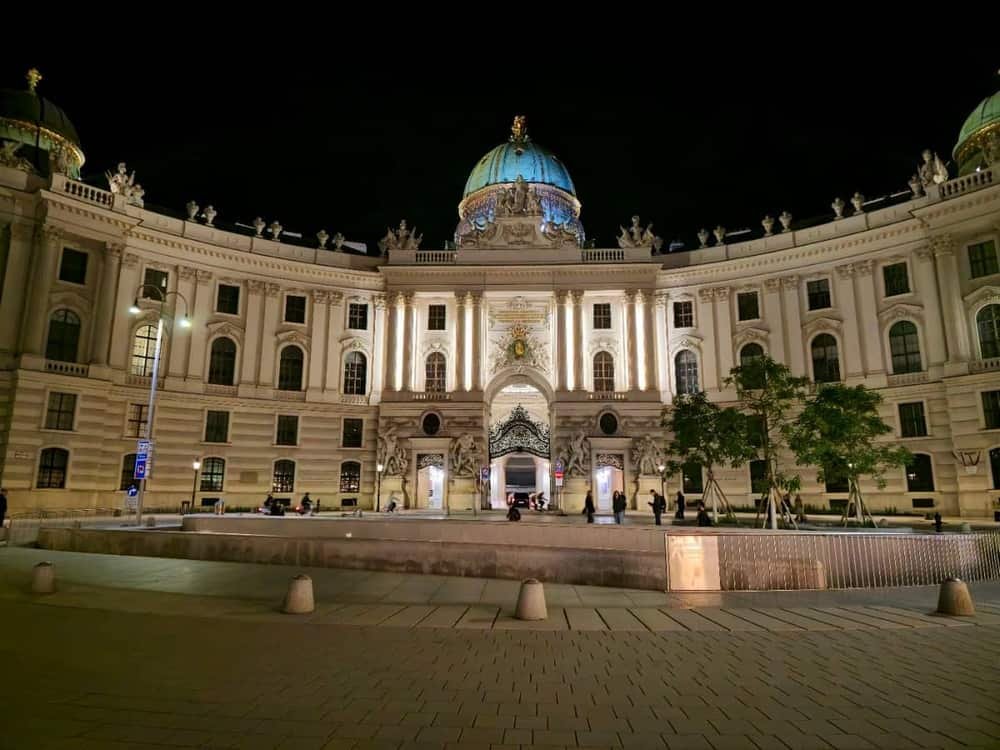
Late morning — Graben, Kohlmarkt and the Hofburg. Walk down the Graben past the Plague Column, turn into the Kohlmarkt and pause at Demel, the former imperial confectioner, for a first slice of cake. At the end of the street the Michaelertor opens into the Hofburg. The Sisi Museum and Imperial Apartments take about an hour (€20, fixed time slots — book ahead; sisimuseum-hofburg.at, checked September 2026). Note the Silver Collection is closed, with a final refurbishment phase planned for October and November.
If horses interest you more than porcelain, the Spanish Riding School morning exercise starts from €17 (srs.at, checked September 2026).
Afternoon — library and Albertina. After lunch, step into the baroque State Hall of the National Library (€12), one of the most beautiful rooms in Europe, then cross to the Albertina — Monet to Picasso, plus rotating graphic-art shows (€20.90; open to 21:00 on Wednesdays and Fridays, which frees your afternoon on those days).
Coffee break. With Café Central closed, go to Café Hawelka in the Dorotheergasse for smoky, bohemian charm, or the reopened Café Bräunerhof around the corner. Read our coffee-house etiquette guide first — ordering "a coffee" is not how it works.
Evening — the Opera. Walk to the Vienna State Opera. If you have a ticket, dress up a little and arrive early. If not, the standing places go on sale on the day, and the 40-minute guided tour (€18, wiener-staatsoper.at, checked September 2026) runs on many days. Our State Opera tickets guide explains all of it. Dinner afterwards: a schnitzel at Figlmüller or something lighter along the Ring.
Day 2: Schönbrunn, Karlsplatz and a concert
Morning — Schönbrunn. Take the U4 to Schönbrunn and aim for the first time slot. The Palace Ticket (€42) covers all the rooms on the piano nobile, including the apartments of Franz Joseph and Sisi and Maria Theresa's chambers, with an audioguide, in about 75 minutes; the shorter State Apartments ticket costs €30 (schoenbrunn.at, checked September 2026). The park is free and open from 06:30, so walk up to the Gloriette for the classic view back over the palace and the city. Families may add the zoo; everyone else should resist and head back to town by lunchtime.
Lunch — Naschmarkt. Get off at Kettenbrückengasse and walk through the Naschmarkt towards Karlsplatz, eating as you go. Remember the stalls are closed on Sundays; on Saturdays a flea market sets up at the far end.
Afternoon — Secession and Karlskirche. At the end of the market stands the gold-domed Secession, home to Klimt's Beethoven Frieze (€13, closed Mondays; secession.at, checked September 2026). Then cross to the Karlskirche, Vienna's great baroque church. If you prefer old masters, this is the afternoon for the Kunsthistorisches Museum instead — book the slot.
Evening — music. Vienna's concert halls are a short walk from Karlsplatz. The Musikverein, with its Golden Hall, and the Konzerthaus publish their programmes months ahead; buy on their own websites or at the box office, never from costumed street sellers. Our concerts page lists how to buy safely.
Day 3: Belvedere, Hundertwasser and the vineyards
Morning — Klimt. The Upper Belvedere holds *The Kiss* and the largest collection of Klimt paintings anywhere, alongside Schiele and Kokoschka. The Upper Belvedere ticket costs €23; the 2-in-1 with the Lower Belvedere €32; it opens daily at 09:00 (belvedere.at, checked September 2026). Arrive at opening: the room with *The Kiss* fills quickly. Walk down through the formal gardens afterwards.
Midday — Hundertwasser. A tram ride or a 25-minute walk takes you to the Hundertwasser House — a residential building you can only see from outside. The nearby KunstHausWien shows the artist's work if you want more.
Afternoon — the Prater. Continue to Leopoldstadt for a turn on the Giant Ferris Wheel, built in 1897 and made famous by *The Third Man*, and a stroll on the chestnut-lined Hauptallee.
Evening — a Heuriger. End the trip the most Viennese way: wine from the city's own vineyards. Take the U4 to Heiligenstadt and a short bus ride to Mayer am Pfarrplatz, where Beethoven lived in 1817, or head to Grinzing or Nussdorf. Our Heuriger guide explains how the buffet and the wine ordering work, and the full list is on the Heurigen page.
If it rains, or you have more time
- Rain: swap the Prater for the Kunsthistorisches Museum or the Haus der Musik; coffee houses are designed for wet afternoons.
- Four days: add a morning at the Leopold Museum and MuseumsQuartier, or the Wachau by train.
- Winter: from 6 November 2026 the Christmas markets take over the evenings.
For the full picture of costs, see Vienna prices, and build your own version in the trip planner.
Where to stay nearby
Live prices and availability on a map centred on this exact spot — hotels, apartments and hostels, so you can judge the walk from here rather than guess from an address.
Bookings made through this map earn us a commission. Your price is unaffected.