Guides
One Day in Vienna: A Timed Route That Actually Works
Tony Denesa – Travel Advisor9 min read
The short version
One day is not enough for Vienna, and nobody should pretend otherwise. But one well-planned day is enough to understand why people come back: a Gothic cathedral, an imperial palace, one great collection, a proper coffee house and an evening of music, all within walking distance in the Innere Stadt. The route below is built around that compact core, so you spend the day on foot rather than on platforms.
- 08:30 — St. Stephen's Cathedral before the tour groups.
- 10:00 — The Hofburg: Sisi Museum and Imperial Apartments on a booked time slot.
- 12:30 — Lunch in the lanes between the Graben and the Hofburg.
- 14:00 — One museum: the Albertina (central) or the Upper Belvedere (Klimt's *The Kiss*).
- 16:30 — Coffee and cake in a historic café.
- 18:00 — The Opera quarter, Karlskirche at dusk.
- Evening — music: opera, a concert, or at least a drink in a legendary bar.
Know this before you start (checked September 2026):
- Café Central is closed for renovation until winter 2026. Do not build your day around it — the alternatives below are just as beautiful.
- 48- and 72-hour transport tickets no longer exist. For a single day you will mostly walk; if you need transport, a single ride costs €3.20 on paper or €3.00 digital, and a 24-hour ticket €10.20 paper / €9.70 digital (Wiener Linien tariff, checked September 2026). More in our getting around guide.
- Book the Hofburg slot the night before. The Sisi Museum works with fixed time slots, and genuine online tickets are sold only via imperialtickets.com.
- If your day is a Sunday, the Naschmarkt stalls are closed; if it is a Monday, remember that the Kunsthistorisches Museum is closed and needs a pre-booked time slot on every other day.
Arriving the same morning? The airport transfer guide explains how the 2026–2027 S-Bahn closure changes the trip into town — the CAT currently runs as a bus to Wien Mitte.
08:30 — St. Stephen's Cathedral
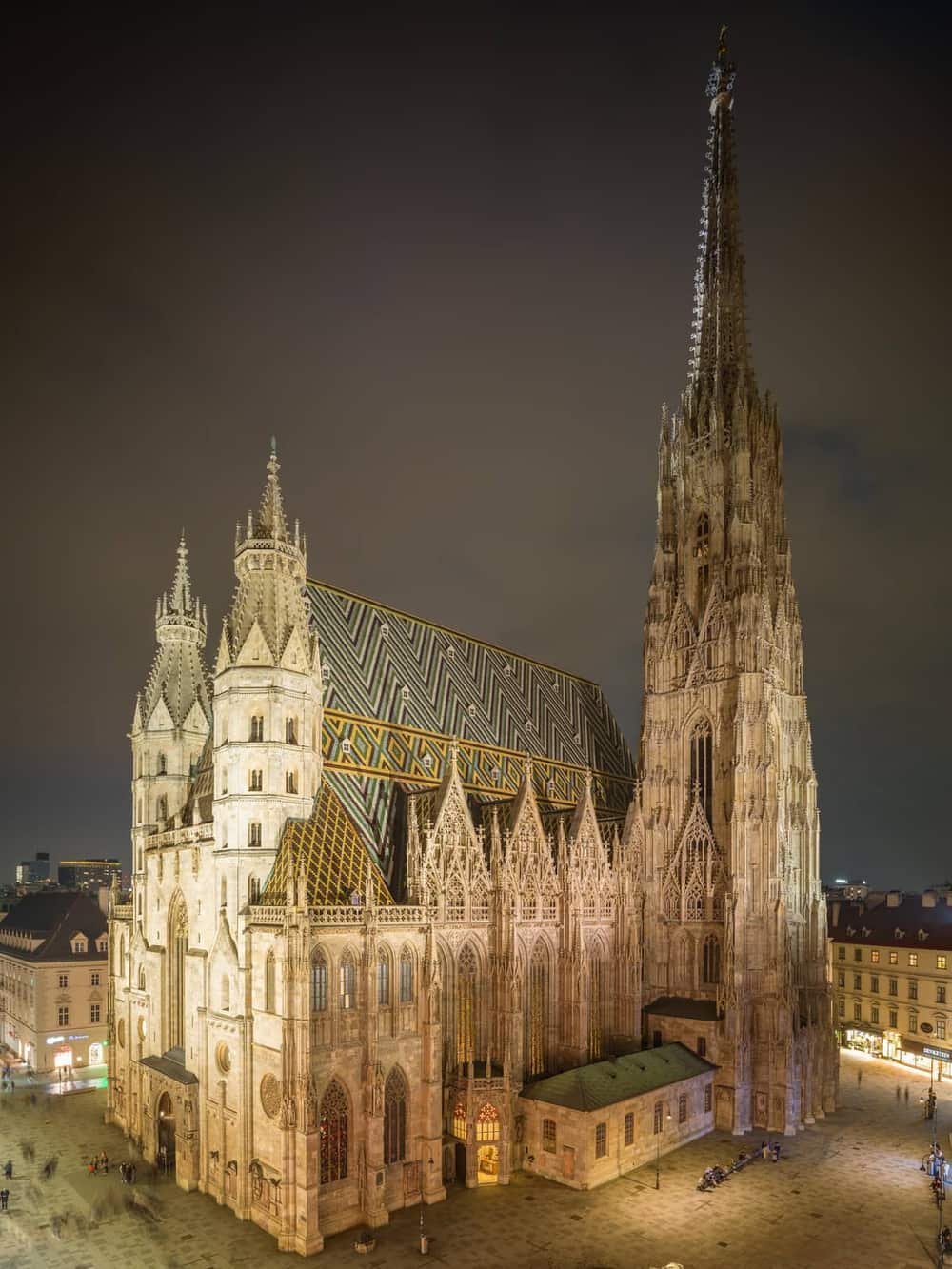
Start at St. Stephen's Cathedral, the Stephansdom, when Stephansplatz is still quiet and the light comes low through the windows. The rear part of the nave is free to enter. If you want more, choose one extra rather than all of them:
- South Tower — 343 steps, €8. The classic view over the patterned tile roof and the old town. Worth it if your legs are willing.
- North Tower lift — €8. An easier ride up to the great Pummerin bell, with a lower but still fine view.
- All-inclusive ticket — €29. Audioguide, both towers, catacombs and the Dom Museum, valid for a year — good value only if you plan to come back.
Prices from stephanskirche.at, checked September 2026. The towers open at 09:00, and tourist visits inside are restricted during services, so the South Tower at 09:00 is the natural first move. Allow an hour in total.
09:30 — Graben and Kohlmarkt
Walk down the Graben, past the Baroque Plague Column, then turn left into Kohlmarkt, Vienna's most expensive shopping street, which frames the green dome of the Michaelertrakt at its end like a stage set. Glance into the windows of Demel, the former imperial confectioner founded in 1786 — you will come back later, when it opens at 10:00 and the cakes are the point. The walk takes ten minutes at a slow pace; that is exactly how it should be done.
10:00 — The Hofburg
Pass through Michaelerplatz into the Hofburg, the winter residence from which the Habsburgs ran an empire for more than six centuries. With one day, the best single ticket is the Sisi Museum with the Imperial Apartments: €20 for adults, €12 for ages 6–18, about 60 minutes, fixed time slots (sisimuseum-hofburg.at, checked September 2026). Note that the Silver Collection is currently closed, and a final refurbishment phase from 6 October to 18 November 2026 brings reduced hours (10:00–16:30) and a 25% discount — check the site before you book.
If Sisi does not interest you, two alternatives sit in the same complex:
- The State Hall of the Austrian National Library — one of the most beautiful Baroque library halls in Europe; €12 (onb.ac.at, checked September 2026). Forty minutes is enough.
- The Spanish Riding School — morning exercise from €17, performances from €26 (srs.at, checked September 2026). Check the calendar: sessions do not run every day.
Serious about the imperial side? Our Hofburg and Sisi Museum tickets guide compares every option.
12:30 — Lunch, the Viennese way
You have two good options within five minutes of the Hofburg, and neither requires a long sit-down:
- Trzesniewski on Dorotheergasse — tiny open sandwiches with spreads, eaten standing, a Viennese institution since long before "small plates" were fashionable. Order three or four and a small beer or juice.
- Zum Schwarzen Kameel on Bognergasse — a historic delicatessen and restaurant; the front bar serves excellent sandwiches, the dining room a more formal lunch.
If your heart is set on schnitzel, Figlmüller near the cathedral is the famous address, but it is busy and best booked ahead. On a one-day visit, a long queue is the most expensive thing you can buy.
14:00 — One museum, chosen well
This is the day's big decision. Choose one, not two.
Option A — the Albertina (stay central). The Albertina sits on a bastion behind the Opera, three minutes from the Hofburg. The permanent collection runs from Monet to Picasso, the Habsburg state rooms are open to visitors, and the bastion terrace outside, with its view over the Opera, is free to everyone. €20.90, open daily 10:00–18:00, Wednesdays and Fridays until 21:00 (albertina.at, checked September 2026). Allow two hours.
Option B — Klimt at the Upper Belvedere. If *The Kiss* is why you came, go to the Upper Belvedere, where it hangs alongside the world's largest collection of Klimt paintings. €23, daily 09:00–18:00 (belvedere.at, checked September 2026). It is about 25 minutes on foot from the Opera, or a short tram ride on line D — check departures in the WienMobil app. Allow two hours, then walk down through the Baroque gardens. Details in our Belvedere and Klimt tickets guide.
The Kunsthistorisches Museum deserves half a day on its own and now needs a time slot booked in advance; on a single day, it tends to eat everything else. Save it for a return trip.
16:30 — Coffee and cake
After the museum, sit down properly. The Viennese coffee house is not a place to grab a drink; it is a place to stay. A few addresses that work at this hour:
- Café Sacher behind the Opera — the original Sachertorte, daily 07:00–23:00. Touristy, yes, but it is the one.
- Demel on Kohlmarkt — imperial confectionery, open until 19:00.
- Café Hawelka on Dorotheergasse — smoke-browned walls, bohemian regulars,, famous for its Buchteln.
- Café Sperl near Naschmarkt — billiard tables, 1880 interior, fewer tourists.
Order a Melange, take your time, and read our coffee house etiquette guide if you want to do it the local way.
18:00 — The Opera and Karlskirche
Walk to the Vienna State Opera. If the building matters more to you than a performance, the guided tour costs €18 and lasts about 40 minutes (wiener-staatsoper.at, checked September 2026), but tour times depend on rehearsals and are published month by month. Otherwise continue past it to Karlskirche, whose green dome and twin columns are at their best reflected in the pond at dusk. On a weekday the Naschmarkt is two minutes further on for a pre-dinner glass.
Evening — music, or at least a very good bar
- The Opera itself. Standing places go on sale from 10:00 on the day of the performance and are among the great bargains of European culture. Our State Opera tickets guide explains how it works in the 2026/27 season.
- A concert. The Musikverein and Konzerthaus programmes are on our concerts page. Buy only from the venue or a recognised agency — never from street sellers.
- Just a drink. Loos American Bar, designed by Adolf Loos, is a tiny, mirrored jewel box a few minutes from Stephansplatz. One cocktail there is a fitting full stop to the day.
If you have a little more time
With a second day, add Schönbrunn — see our Schönbrunn tickets guide — and the Kunsthistorisches Museum; our two-day itinerary does exactly that, and three days in Vienna adds a Heuriger evening. If you are staying overnight, where to stay in Vienna compares the districts honestly.
Where to stay nearby
Live prices and availability on a map centred on this exact spot — hotels, apartments and hostels, so you can judge the walk from here rather than guess from an address.
Bookings made through this map earn us a commission. Your price is unaffected.