
Guides
What to Eat in Vienna: Schnitzel, Tafelspitz, the Würstelstand and the Cakes
Tony Denesa – Travel Advisor12 min read
The short version
Viennese cooking is often called the only cuisine in the world named after a city, and it shows the empire on a plate: schnitzel with Italian and Spanish ancestors, goulash from Hungary, dumplings and pastries from Bohemia, all refined over two centuries in the city's inns and coffee houses. Here is what to order, and where.
- Must-eats: Wiener Schnitzel, Tafelspitz, a sausage from a Würstelstand, goulash, Apfelstrudel, Kaiserschmarrn and a slice of Sachertorte.
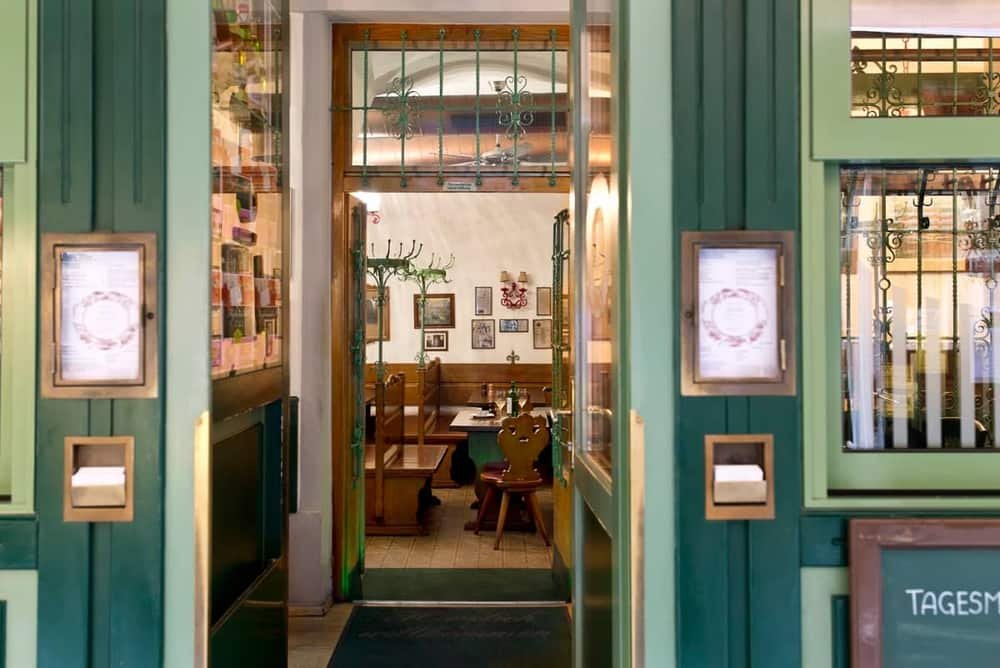
- Where locals eat them: in a Beisl or Gasthaus, the traditional neighbourhood inn, rather than in the most famous names.
- Timing: many traditional restaurants serve hot food roughly from 11:00 to 14:00 and from 18:00 to 22:00, though plenty cook all day.
- Tipping: round up by 5–10% and say the total when you pay, rather than leaving coins on the table.
Browse all addresses on our restaurants page.
The savoury classics
Wiener Schnitzel
A thin escalope, breaded and fried in lard or clarified butter until the crust puffs up in waves, served with a wedge of lemon and potato salad or parsley potatoes. Under Austrian food standards, a dish called Wiener Schnitzel must be made from veal; when it is pork, the menu should say Schnitzel Wiener Art ("Viennese-style"). Neither is a trick — just know which you are ordering.
The most famous address is Figlmüller, whose pork schnitzel hangs over the edge of the plate; it has a second house in the Bäckerstraße. Book ahead or expect a queue. For the veal classic in a grander room, try Meissl & Schadn on the Ring, which specialises in it. For a proper neighbourhood feel, Glacis Beisl behind the MuseumsQuartier and Gasthaus Pöschl near Stephansplatz are reliable.
Tafelspitz
The emperor's dish, or so the story goes: a cut of beef simmered for hours, served in its copper pot. First you drink the clear broth, often with noodles or semolina dumplings; then the meat, with Apfelkren (grated apple and horseradish), chive sauce, spinach and crisp rösti. The bone marrow is spread on dark toast. Plachutta on the Wollzeile turned Tafelspitz into an institution and does it with ceremony.
Goulash and the rest of the menu
- Saftgulasch: Vienna's beef goulash, more onions and paprika than meat, served with a Semmel roll or bread dumpling. The Fiakergulasch adds a fried egg, a sausage and a gherkin.
- Backhendl: Viennese fried chicken, breaded like a schnitzel.
- Zwiebelrostbraten: sirloin steak under a heap of crisp fried onions.
- Beuschel: a ragout of veal lung in a sour cream sauce — the test of an old-school Beisl.
- Krautfleckerl and Grammelknödel: cabbage pasta and crackling dumplings, simple and filling.
- Soups: Frittatensuppe (broth with strips of pancake), Leberknödelsuppe (liver dumpling) and Grießnockerlsuppe (semolina dumpling).
- Erdäpfelsalat: Viennese potato salad is dressed with vinegar, oil and broth, not mayonnaise, and it is the right partner for schnitzel.
Street food: the Würstelstand
The sausage stand is so central to Viennese life that it sits, alongside the coffee house and the Heuriger, on Austria's national list of intangible cultural heritage. Stands stay open late, and at midnight you will see opera-goers in evening dress next to taxi drivers.
- Käsekrainer: a smoked sausage with pockets of melted cheese — the Viennese favourite.
- Burenwurst: the everyday boiled sausage.
- Bosna: a Salzburg-born hot dog with onions and curry spice, sold everywhere.
- Leberkäse: a warm slice of meat loaf in a Semmel roll, with mustard. Leberkas-Pepi near the Opera does many versions.
Order with süß (sweet) or scharf (hot) mustard and a slice of bread or a roll. The best-known stand is Bitzinger beside the Albertina, a few steps from the Opera.
Sweet Vienna
In the coffee house
Coffee houses are where Vienna eats cake. Read our coffee-house etiquette guide before ordering, and then:
- Sachertorte: chocolate sponge, a thin layer of apricot jam and a dark chocolate glaze, with unsweetened whipped cream. Hotel Sacher and the confectioner Demel fought for years over the right to call their cake the original; eat one at Café Sacher and the other at Demel, and decide for yourself.
- Apfelstrudel: paper-thin pastry around apples, raisins and cinnamon, often served warm with vanilla sauce. Topfenstrudel, with sweet curd cheese, is the local's choice.
- Esterházy-Torte and Punschkrapfen: nut-meringue layers under a feathered white glaze; a pink, rum-soaked cube.
- Buchteln: yeast buns filled with jam. Café Hawelka is famous for them.
In the Gasthaus
- Kaiserschmarrn: a thick pancake torn into pieces, caramelised, dusted with sugar and served with plum compote. Good enough for a whole meal.
- Marillenknödel: apricot dumplings rolled in buttered breadcrumbs — in summer, when apricots from the Wachau arrive.
- Palatschinken and Germknödel: thin pancakes with apricot jam; a steamed yeast dumpling with plum jam, poppy seeds and melted butter.
What to drink
- Wine: Vienna is a wine city with vineyards inside its limits. Order a Wiener Gemischter Satz, the local field blend of several white varieties grown and harvested together, or a Grüner Veltliner. A G'spritzter is wine with soda water. For the full experience, see our Heuriger guide and the historic Mayer am Pfarrplatz.
- Sturm: in early autumn, partly fermented new wine, cloudy and sweet.
- Beer: Ottakringer is brewed in the city; a Seiterl is a small glass, a Krügerl a half-litre.
- Soft drinks: Almdudler, a herbal lemonade, and apple juice with soda (Apfelsaft gespritzt).
- Coffee: a Melange, an Einspänner or a Brauner — our coffee houses page lists where.
Where to eat, by mood
- Markets: graze at the Naschmarkt (stalls Monday to Friday 06:00–21:00, Saturday to 18:00, closed Sunday), or go local at the Karmelitermarkt in Leopoldstadt.
- Open sandwiches: stand at the bar of Zum Schwarzen Kameel, a historic delicatessen near the Graben.
- Beer garden: pork knuckle and Budweiser at the Schweizerhaus in the Prater, in season.
- Fine dining: Steirereck in the Stadtpark is Austria's best-known table for modern Austrian cooking. Book weeks ahead.
- Old-school inns: Huth Gastwirtschaft and Reinthaler's Beisl keep the classics honest. Many Gasthäuser offer a good-value weekday lunch menu.
A few honest tips
- Avoid restaurants with multilingual picture menus and staff calling you in on Kärntner Straße.
- Reserve for dinner at the famous names, especially on weekends.
- Bread in a basket may be counted and charged; this is normal.
- Sunday: most shops close, but restaurants, coffee houses and Heurigen stay open. Plan a longer stay with Vienna in five days or our prices page.
Where to stay nearby
Live prices and availability on a map centred on this exact spot — hotels, apartments and hostels, so you can judge the walk from here rather than guess from an address.
Bookings made through this map earn us a commission. Your price is unaffected.